An AI marketing agency combines artificial intelligence tools with human oversight to automate marketing tasks like content generation, audience segmentation, performance analytics, and campaign management. These agencies license enterprise AI platforms, train them on client data, and deliver marketing outputs without building internal AI infrastructure. For early-stage B2B SaaS founders, they represent one path to scaling marketing without hiring a full team. The alternative is using direct AI tools like Sparqo that draft content daily.
What Exactly is an AI Marketing Agency?
AI marketing agencies occupy the middle ground between traditional marketing consultancies and self-service AI tools. They license expensive enterprise AI platforms (often $10,000-$50,000+ annually just for software access), configure them for specific client needs, and charge retainers or project fees for managed output.
The core distinction from traditional agencies is workflow automation. Where a conventional agency might spend 20 hours researching and writing a whitepaper, an AI marketing agency uses trained models to generate a first draft in minutes, then applies human editors for quality control. This compression of production time is their primary value proposition.
Most AI marketing agencies emerged between 2021 and 2024, riding the wave of large language model availability. They typically fall into three categories:
- Full-service AI agencies: Handle strategy through execution, using AI at every stage
- Content-specialist AI agencies: Focus narrowly on AI-generated blogs, social posts, and ad copy
- Hybrid AI consulting firms: Advise on AI tool selection and implementation, with optional execution support
The "agency" label matters legally. These are registered businesses with contracts, account managers, and deliverable commitments. This differs from freelancers using ChatGPT or founders running their own AI prompts.
The Core Services Offered by AI Marketing Agencies
Service packages vary widely, but most AI marketing agencies offer modular combinations of the following:
Content Generation at Scale
The flagship service. Agencies use fine-tuned language models to produce blog posts, landing page copy, email sequences, social media content, and ad creative. The key selling point is volume: 50-200 content pieces monthly versus a human writer's 8-15. Quality depends heavily on prompt engineering and brand voice training, which agencies claim to systematize.
Predictive Analytics and Audience Segmentation
Some agencies deploy machine learning models to analyze customer data, predict churn, identify high-value segments, and optimize targeting. This requires clean data infrastructure. Many early-stage SaaS companies lack sufficient historical data for these models to function well.
Programmatic Ad Management
AI-driven media buying across Google Ads, Meta, LinkedIn, and programmatic networks. Algorithms adjust bids, creatives, and targeting in real-time based on performance signals. Agencies charge a percentage of ad spend (typically 10-20%) plus management fees.
SEO and SERP Optimization
Automated keyword research, content brief generation, and rank tracking. AI tools identify content gaps, optimize existing pages, and predict ranking potential. Some agencies guarantee specific ranking improvements; most do not.
Email and Lifecycle Marketing
Behavioral-triggered email sequences, personalization at scale, and send-time optimization. AI determines which content each recipient receives and when.
| Service Category | Typical Output Volume | Human Touch Points | Best Fit Stage |
|---|---|---|---|
| Content generation | 50-200 pieces/month | Editing, strategy | Pre-product-market fit |
| Predictive analytics | Monthly dashboards | Interpretation, action | Post-Series A with data |
| Programmatic ads | Continuous optimization | Creative direction, budget | Proven unit economics |
| SEO automation | 10-50 optimized pages/month | Technical review | Content marketing committed |
| Lifecycle email | Unlimited sends | Copy review, exception handling | Existing email list 10K+ |
AI Marketing Agencies vs. In-House AI Tools: A Founder's Dilemma
The core decision facing indie founders and small B2B SaaS teams: pay an agency markup for managed AI, or operate AI tools directly?
This mirrors the classic build-vs-buy debate, but with compressed timelines. AI capabilities that required engineering teams in 2022 are now accessible via API or web interface.
The Agency Model: What You Actually Get
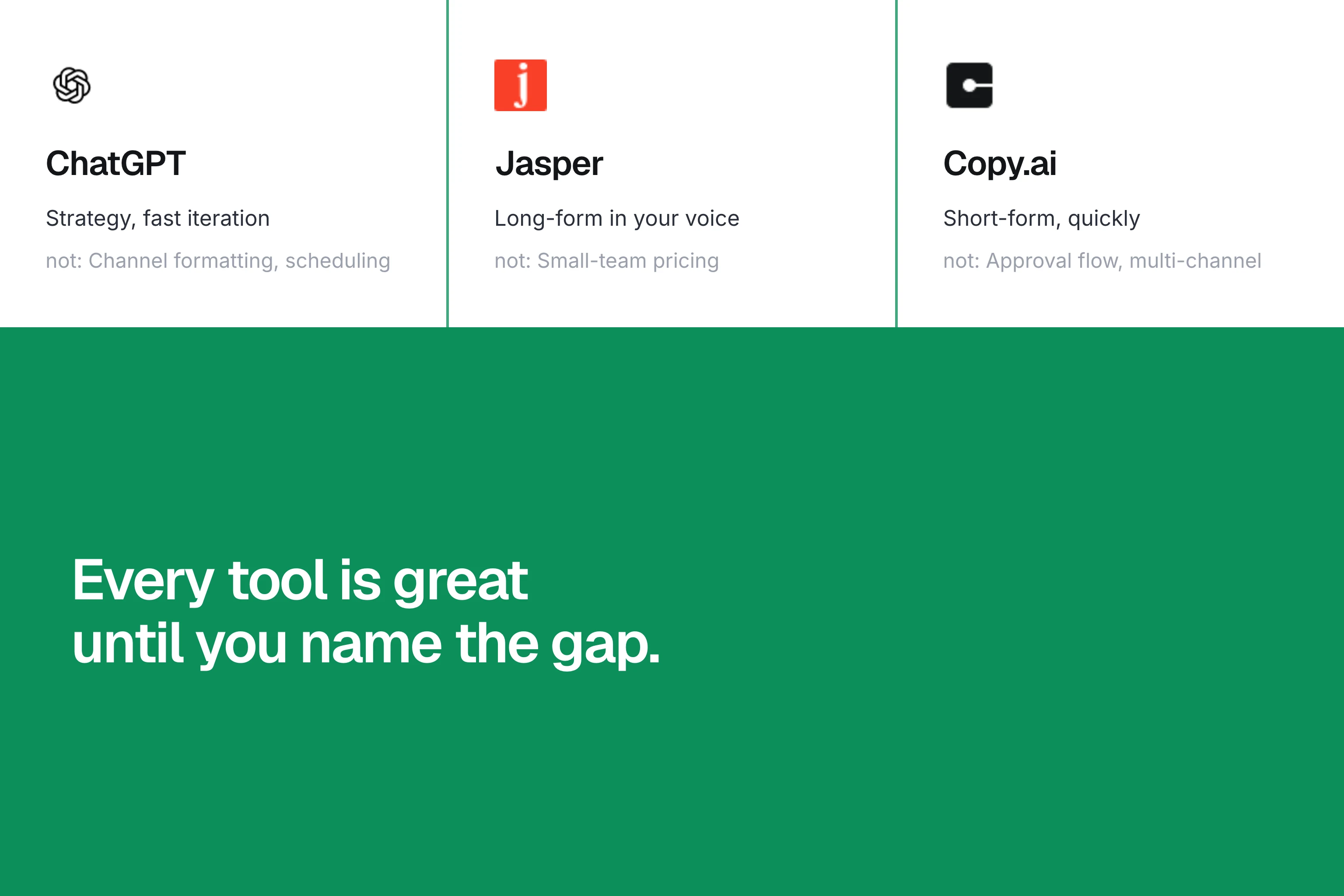
Access to expensive tooling without direct licensing. Enterprise AI platforms like Jasper Enterprise, Copy.ai for Teams, or custom GPT deployments cost $12,000-$60,000/year minimum. Agencies spread this across clients.
Claimed expertise. Agencies advertise "prompt engineering specialists" and "AI-trained strategists." Quality varies enormously. Some employ genuine experts; others resell basic ChatGPT output with markup.
Accountability through contracts. Fixed deliverables, revision rounds, and escalation paths. This matters for founders who want marketing handled, not managed.
The hidden costs: Implementation fees ($2,000-$10,000), minimum commitments (6-12 months common), and "training" periods where output quality ramps up on your dime.
The Direct Tool Model: What Sparqo and Similar Platforms Offer
Immediate execution. No onboarding beyond account setup. For Sparqo, this means connecting your product context and receiving daily drafts.
Transparent, predictable pricing. SaaS subscription models versus agency retainer opacity. You know exactly what functionality costs without parsing hourly rates or blended fees.
Full control and iteration speed. Change messaging instantly. Test 20 headline variations this afternoon. No change orders, no account manager scheduling.
The tradeoff: You operate the system. For technical founders comfortable with AI interfaces, this is preference. For founders wanting marketing completely off their plate, it adds cognitive load.
The Real Comparison Framework
| Factor | AI Marketing Agency | Direct AI Tool (Sparqo model) |
|---|---|---|
| Monthly cost | $3,000-$15,000+ | $50-$500 |
| Setup time | 2-6 weeks | Hours |
| Minimum commitment | 6-12 months | Monthly cancelable |
| Output volume | High, with revision cycles | Daily, continuous |
| Strategic input required | Low (they advise) | Medium (you direct) |
| Brand voice consistency | Trained over time | Immediate via product context |
| Multi-channel coverage | Negotiated per scope | Built-in omni-channel |
| Data access and portability | Limited, often siloed | Full ownership |
| Scalability | Linear cost increases | Fixed or tiered pricing |
When an AI Marketing Agency Makes Sense for Your B2B SaaS
Specific scenarios where agency engagement outperforms direct tool usage:
You Have Complex, Regulated Messaging
Healthcare AI, fintech infrastructure, or security tools require legal review and compliance alignment. Established agencies develop approval workflows and liability frameworks that individual tools don't provide.
Your Founding Team Has Zero Marketing Bandwidth
Not "busy" but truly absent: technical founders in deep product build, solo operators managing fundraising and hiring simultaneously. The agency becomes your marketing department.
You Need Integrated Creative and Paid Media
When organic content, performance creative, and media buying must coordinate tightly (common in PLG companies with significant paid acquisition), agency orchestration can outperform siloed tools.
You Have Budget But Not Time for Learning Curves
Post-Series A companies with $50K+/month marketing budgets often prefer managed services to building internal AI competency.
The Agency Has Vertical-Specific Training
Some agencies develop genuine expertise in DevTools, infrastructure, or specific SaaS categories. This is rare but valuable. Generic "AI marketing for everyone" agencies rarely outperform focused tools.
The Cost of AI Marketing Agencies: What to Expect in 2026
Pricing structures in 2026 fall into four models, with substantial variation based on agency reputation and scope:
Retainer Model (Most Common)
Fixed monthly fee for defined deliverables. Typical ranges:
- Entry tier: $2,500-$5,000/month (limited content volume, one channel focus)
- Growth tier: $5,000-$12,000/month (multi-channel, moderate paid support)
- Scale tier: $12,000-$30,000+/month (comprehensive coverage, significant ad spend management)
Retainers usually require 6-12 month commitments with 30-60 day termination clauses.
Project-Based Pricing
One-time engagements for specific deliverables:
- AI content strategy: $5,000-$15,000
- Tool implementation and training: $3,000-$10,000
- Campaign-specific content sprints: $2,500-$7,500
Performance-Based Structures
Emerging but still minority. Agencies charge base fees plus bonuses tied to metrics:
- Cost per lead reduction: 10-20% of savings
- Revenue attribution: 3-8% of attributed sales
- Rank improvements: $500-$2,000 per target keyword achieved
Performance models align incentives but require robust tracking infrastructure most early-stage companies lack.
Hidden and Ancillary Costs
Budget for these unadvertised expenses:
- Platform access fees: $200-$500/month for analytics dashboards
- Ad spend minimums: Often $5,000-$10,000/month required for paid media management
- Revision overages: Exceeding included revision rounds ($150-$400/hour)
- Rush fees: 25-50% markup for accelerated timelines
Total cost of ownership frequently runs 1.3-1.6x the stated retainer.
Weighing the Pros and Cons for Your Early-Stage Startup
Advantages of AI Marketing Agencies
Speed to market without internal hiring. Skip the 6-12 week cycle of recruiting, interviewing, and onboarding a marketing hire. Agency engagement can begin in days.
Access to enterprise-grade tooling. The AI platforms agencies use often exceed what founders would independently select or configure.
Built-in quality control (theoretically). Human review layers catch obvious AI errors, tone mismatches, and factual hallucinations.
Scalable without headcount planning. Increase output without compensation benchmarking, benefits administration, or equity dilution.
Disadvantages and Risks
Opacity in "AI" claims. Many agencies use the same consumer tools available to anyone, wrapped in process language. The actual AI differentiation is often minimal.
Dependency creation. Agencies optimize for retention. Knowledge about your brand, audience, and successful content patterns lives with them, not you.
Alignment challenges. Agencies serve multiple clients. Your product's nuances compete for attention with their full roster.
Rigidity in iteration. Change requests flow through account management. Fast experimentation, the core advantage of AI, gets bureaucratized.
Quality ceiling. Even excellent agencies hit limits. The best AI-generated content with human editing rarely matches exceptional human creative direction. For commodity content needs, this gap doesn't matter. For category-defining positioning, it may.
How AI Marketing Agencies Evolved Through 2024-2025
Understanding the trajectory helps evaluate current offerings. The agency market matured substantially over the past two years:
From Tool Resellers to Workflow Integrators
Early AI marketing agencies (2021-2023) essentially marked up access to tools like Jasper and Copy.ai, adding basic prompt templates and light editing. By 2025, surviving agencies developed proprietary workflow systems connecting multiple AI models, automated quality scoring, and integrated feedback loops. The competitive moat shifted from tool access to operational sophistication.
The Rise of Specialized Vertical Agencies
Generalist "AI content for everyone" agencies struggled as direct tools improved. Winners emerged focused on specific sectors: DevTools marketing agencies, healthcare compliance specialists, e-commerce DTC operators. These vertical specialists command premium pricing but deliver genuinely differentiated expertise.
Hybrid Human-AI Teams Standardized
Pure "AI-only" positioning faded. Clients experienced the quality limitations of fully automated output. Successful agencies now structure teams with AI specialists, domain editors, and strategic account leads in fixed ratios, typically 1 human strategist per 3-5 AI operators per client.
Pricing Compression and Consolidation
The agency landscape consolidated in 2024-2025. Venture-backed entrants with unsustainable unit economics folded or were acquired. Surviving agencies raised prices 15-30% annually while improving margins through automation. The mid-market ($3,000-$8,000/month) became increasingly competitive, pushing quality differentiation upward.
Integration with Emerging Channels
Agencies adapted to new distribution channels: AI-native search optimization (for LLM-driven discovery), conversational marketing interfaces, and personalized video at scale. Early movers developed capabilities that remain rare in direct tools.
Evaluating Agency Quality: A Due Diligence Framework
Not all AI marketing agencies deliver equivalent value. Apply this framework when evaluating potential partners:
Technical Sophistication Assessment
Probe their stack. Ask which foundation models power their outputs, how they handle model updates and version control, and whether they fine-tune on client data or rely on prompting alone. Vague answers suggest superficial AI integration.
Request sample workflows. Quality agencies document their human-AI handoff points, quality gates, and revision protocols. This transparency indicates operational maturity.
Evaluate prompt engineering depth. Ask how they develop and test prompts, how they maintain prompt libraries across clients, and their process for adapting to model changes. Top agencies treat this as core intellectual property.
Output Quality Verification
Review unedited AI outputs. Agencies polish showcase pieces heavily. Request raw first-generation samples to assess baseline model performance.
Test for brand voice consistency. Provide specific terminology, tone guidelines, or awkward phrasings your product uses. Evaluate whether subsequent outputs respect these constraints without constant reminders.
Check factual accuracy rates. Ask about hallucination detection processes, source citation practices, and error correction workflows. Request quantitative claims about accuracy metrics.
Operational Reliability
Understand escalation paths. When outputs fail quality standards, what happens? How quickly? At what threshold do human strategists intervene?
Verify data handling practices. Where does client data reside during processing? What retention policies apply? How do they comply with evolving AI regulation (EU AI Act, emerging US state laws)?
Assess knowledge transfer protocols. If you terminate, what documentation, training materials, and performance data transfer with you? Strong agencies build client independence; weak ones engineer dependency.
The Future Trajectory: Agencies vs. Direct Tools Through 2026-2027
Founders making decisions now should anticipate how this market evolves:
Increasing Agency Specialization
The generalist AI marketing agency model faces existential pressure from improving direct tools and vertical SaaS solutions. Expect continued consolidation into specialized operators with genuine industry expertise, particularly in regulated sectors and complex B2B sales motions.
Direct Tool Capability Expansion
Platforms like Sparqo and competitors will absorb more agency-like functionality: automated A/B testing, basic analytics interpretation, and simplified creative generation. The boundary between "tool" and "managed service" blurs continuously.
Pricing Model Evolution
Agencies increasingly experiment with outcome-based pricing tied to revenue attribution, though measurement challenges persist for complex B2B sales cycles. Direct tools may introduce success-based tiers or performance guarantees as confidence in their outputs grows.
Regulatory Differentiation
EU AI Act implementation and US state-level legislation create compliance complexity that benefits established agencies with legal infrastructure. Direct tools may segment into compliance-certified and unregulated versions, complicating founder decisions.
The Enduring Role of Strategic Judgment
Neither agencies nor tools substitute for founder-level positioning decisions, category design, and narrative development. The execution layer commoditizes; the strategy layer retains premium value. Founders should allocate resources accordingly, automating proven playbooks while investing human judgment in differentiation.
Sparqo: An Alternative for Consistent, Omni-Channel Content
For founders evaluating the agency versus direct-tool decision, Sparqo operates in the direct-tool category with specific design choices for early-stage B2B SaaS:
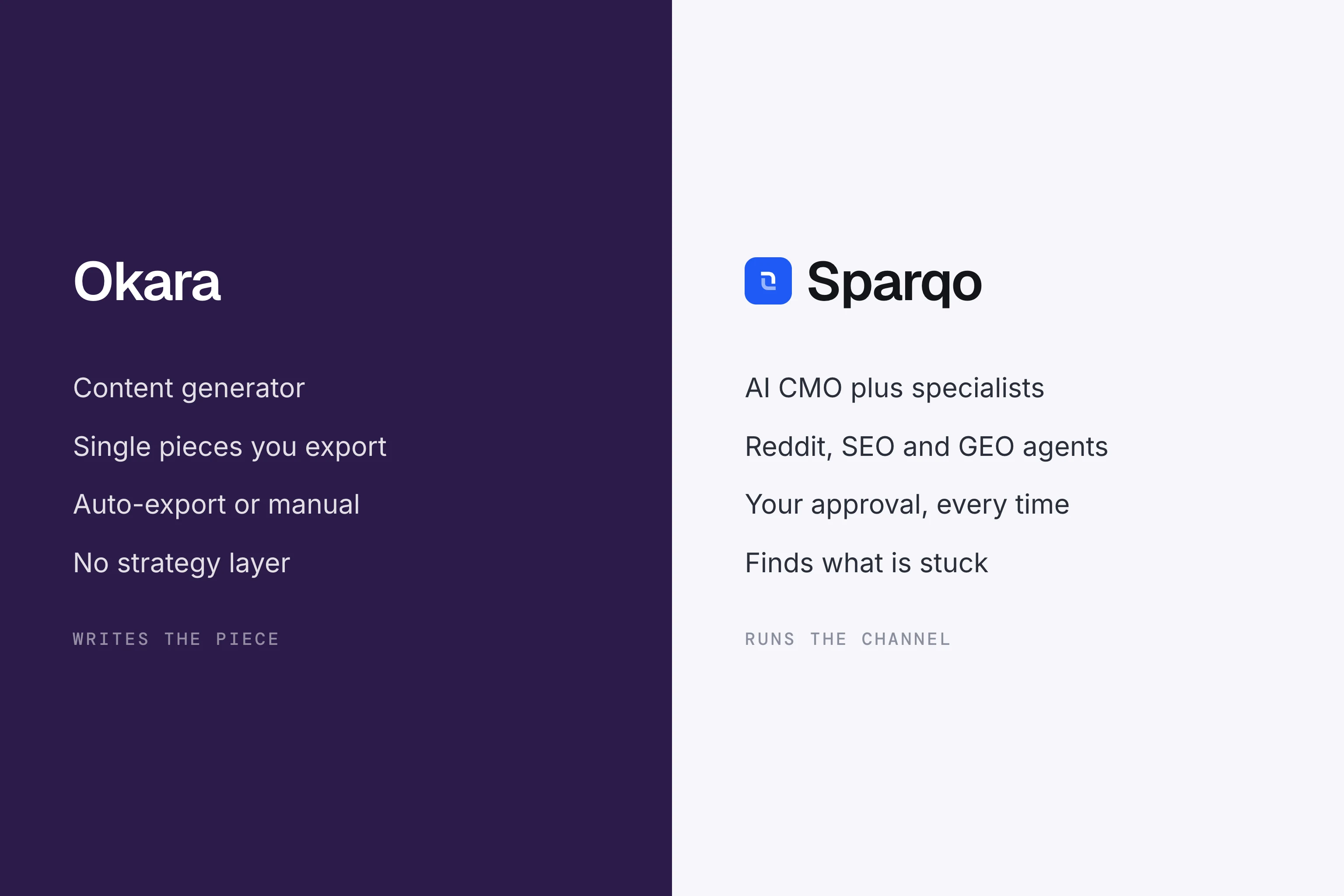
Daily output rhythm. Rather than batch campaigns or monthly content calendars, Sparqo generates fresh drafts every day. This matches the iterative, responsive marketing pace of product-heavy founding teams.
Omni-channel by default. Single inputs generate adapted outputs for LinkedIn, Twitter/X, Reddit (with community-aware formatting), email, and blog. No channel-specific scopes to negotiate.
Founder-time minimization. The system is designed for 10-15 minute daily review, not ongoing operation. For technical founders wanting marketing handled without agency overhead, this targets the specific pain point.
Direct API access for customization. Teams wanting deeper integration can bring their own API keys to control underlying model costs and selection.
The tradeoff is explicit: Sparqo delivers content drafts, not managed campaigns. It does not replace strategic decisions about positioning, channel allocation, or creative direction. It removes the execution bottleneck for teams clear on what they want to say.
Choosing the Right Path for Your Marketing Automation Needs
Decide between agency engagement and direct AI tools by working through this sequence:
First: Assess your actual constraint.
Is it time, expertise, or execution capacity? Be specific. "No time for marketing" often means "no time to figure out marketing strategy," which agencies claim to solve but rarely do well for early-stage products. "No time to write content daily" is execution constraint, better matched to tools like Sparqo.
Second: Audit your marketing maturity.
Pre-launch or pre-revenue companies rarely benefit from agency retainers. The feedback loops are too slow; messaging changes too frequently. Post-revenue with repeatable acquisition channels, agencies can optimize existing systems.
Third: Calculate true cost per useful output.
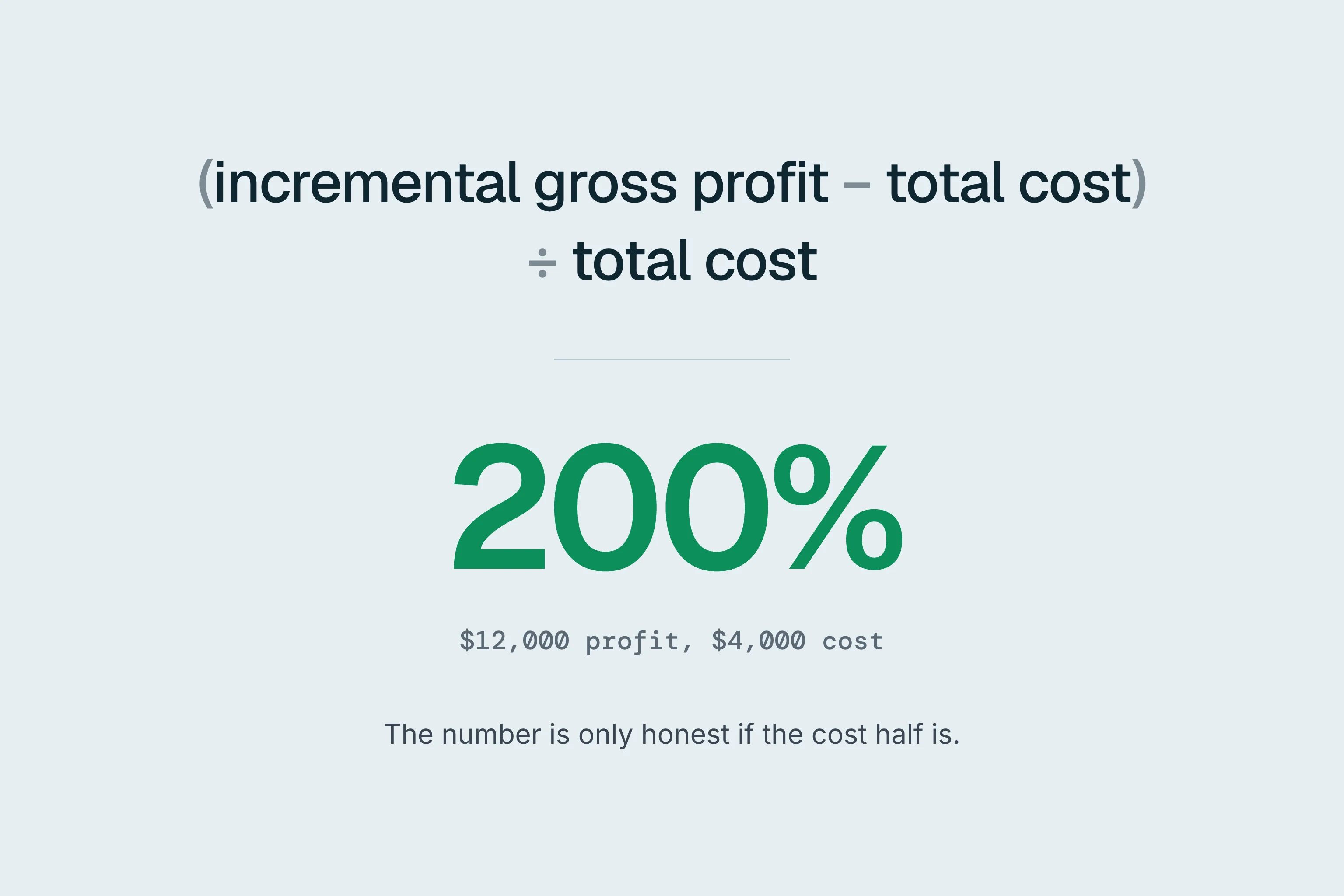
Agency pricing obscures per-unit economics. A $5,000/month retainer producing 40 blog posts and 120 social posts generates content at $31 per deliverable, before hidden costs. A $200/month direct tool producing similar volume operates at $1.67 per deliverable. Quality adjustments matter, but the magnitude informs decision-making.
Fourth: Test before committing.
Reputable agencies offer paid trials or pilot projects. Start there. For tools, monthly subscriptions enable real evaluation. Never sign annual agency contracts without demonstrated fit.
Fifth: Preserve optionality.
Structure engagements so expertise and assets transfer with you. Own your data, your brand voice documentation, and your performance history. The AI tool landscape shifts quarterly. Today's optimal solution may change.
For most indie founders and small B2B SaaS teams in 2026, the economics favor starting with direct AI tools, validating messaging through rapid iteration, and graduating to agency support only when specific needs (compliance, integrated creative/media, or complete founder bandwidth absence) justify the 10-30x cost multiplier.
FAQ
What is an AI marketing agency?
An AI marketing agency is a service business that uses artificial intelligence tools, combined with human management, to deliver marketing outputs like content, analytics, and campaign management. They license enterprise AI platforms and charge fees for configured, managed execution,不同于 direct AI tools that founders operate themselves.
Who are the big 4 AI agents in marketing?
The "big 4" typically refers to major AI agent platforms: OpenAI's GPT models (including ChatGPT Enterprise), Anthropic's Claude, Google's Gemini, and Meta's Llama. In marketing specifically, agencies most commonly deploy Jasper, Copy.ai, Writer, and custom GPT implementations, though these are tools rather than autonomous agents.
How much does an AI marketing agency cost in 2026?
AI marketing agencies typically charge $2,500-$15,000+ per month in retainers, with 6-12 month minimum commitments. Entry tiers cover limited content volume; comprehensive multi-channel support runs $10,000-$30,000/month. Additional costs include setup fees ($2,000-$10,000), platform access, and ad spend minimums. Total cost of ownership often runs 1.3-1.6x stated retainers.
What are the best AI marketing agents?
There is no authoritative "best" ranking, as fit depends on stage and needs. For B2B SaaS founders, effective options include: direct tools like Sparqo (daily omni-channel content), Jasper and Copy.ai (enterprise content at scale), and specialized agencies with proven DevTool expertise. Evaluate based on output quality, integration ease, and total cost per deliverable rather than feature lists.
Can I use AI marketing agencies for Reddit and Instagram specifically?
Some AI marketing agencies offer Reddit and Instagram as part of social packages, but channel-specific expertise varies significantly. Reddit requires community-native formatting and authentic engagement patterns that generic AI struggles with. Instagram demands visual creative capabilities beyond text generation. Most agencies prioritize LinkedIn and Twitter for B2B clients. For Reddit specifically, tools with dedicated Reddit formatting like Sparqo or specialized Reddit-native freelancers often outperform generalist agencies.
Should I choose an AI marketing agency in the USA specifically?
USA-based agencies offer timezone alignment and (claimed) regulatory familiarity for US-incorporated companies, but command 40-100% pricing premiums over comparable agencies in UK, Canada, or Eastern Europe. For content generation specifically, geographic location matters less than vertical expertise. For analytics and paid media with US consumer data, domestic agencies may offer compliance advantages.
How has the AI marketing agency landscape changed in 2025-2026?
The market consolidated significantly, with generalist agencies struggling and vertical specialists thriving. Pricing rose 15-30% annually for surviving agencies. The competitive moat shifted from tool access to operational sophistication: workflow integration, multi-model orchestration, and industry-specific expertise. Direct tools expanded capabilities, narrowing the gap for execution-only needs.

Founder of Sparqo, building an AI CMO that runs SEO, AI visibility and Reddit for indie founders and small teams who do their own marketing.