AI content marketing automation platforms for SaaS founders combine specialist AI agents, multi-channel orchestration, and human approval workflows to draft and schedule marketing across Reddit, Hacker News, SEO, LinkedIn, and X without hiring a team. The best platforms run on flat, transparent pricing instead of inflated per-usage bills, while preventing spam bans through mandatory pre-publication approval.
Why SaaS Founders Need AI Marketing Automation
Marketing is the task most technical founders delay until it becomes urgent. You are shipping features, fixing bugs, and talking to users. Writing LinkedIn posts or finding the right subreddit to engage with feels like a distraction from building. But the gap between a working product and sustainable growth rarely closes without consistent, channel-appropriate content.
The specific pain for SaaS founders is different from other businesses. You are selling to developers, operators, or technical buyers who smell templated marketing from a mile away. Your content needs technical credibility. It needs to show up where your actual users spend time, which for dev-tools often means Hacker News, specific Reddit communities, technical SEO, and practitioner-heavy LinkedIn posts, not generic content farms.
Traditional marketing automation like HubSpot or Marketo assumes you have a marketing manager to build workflows, write copy, and monitor performance. Agency retainers start at three to five thousand monthly for multi-channel execution. Hiring a full-time content marketer runs six figures plus equity and training time. For pre-seed through Series A teams, these paths burn cash that should go to product and engineering.
AI marketing automation built for founders fills this gap. It does not replace strategic thinking, but it removes the daily execution burden: researching what to say, drafting variations, scheduling across channels, and learning from what performs. The key is finding a platform that understands SaaS buyer psychology and founder constraints, not a generic AI writer with extra buttons.
Key Features of Effective AI Content Marketing Platforms for SaaS
Not all AI marketing tools serve the same use case. Many are designed for enterprise content teams or e-commerce brands pumping out product descriptions. SaaS founders need specific capabilities that match how technical products are bought.
Technical Audience Understanding
Effective platforms train agents on developer and practitioner language. They know the difference between "serverless functions" and "lambda" as search intent. They recognize that Hacker News upvotes come from genuine technical insight, not promotional headlines. This matters because content that reads as marketing to technical buyers gets ignored or actively criticized.
Channel-Specific Optimization
Single-channel AI writers (just SEO blogs, just social posts) leave founders managing five different tools. Look for platforms with specialist agents per channel: an SEO agent that clusters keywords and drafts technical explainers, a Reddit agent that researches community norms and crafts value-first comments, a LinkedIn agent that balances personal founder voice with product mentions. Each channel has different constraints, and unified coordination prevents conflicting messaging.
Cost Transparency and Scalability
Per-usage pricing creates nasty surprises. A founder who finds product-market fit and wants to scale content suddenly faces 10x platform bills. Flat, transparent pricing avoids this: one predictable subscription with no markup on model usage, so heavy output stays predictable, not punitive. See how pricing works.
Learning and Improvement Loops
One-off AI generation is useless if it does not improve. The best platforms build feedback loops: which drafts you approved versus edited, which posts drove traffic or signups, which channels converted. This data retrains agents over time, so month six produces better output than month one without manual prompt engineering.
| Feature | Generic AI Writers | SaaS-Focused Platforms |
|---|---|---|
| Audience training | Broad consumer/B2B | Technical/developer buyers |
| Channel coverage | 1-2 channels | 5-6 coordinated channels |
| Pricing model | Per-credit or subscription markup | Flat rate, no per-usage markup |
| Approval workflow | Optional or missing | Built-in mandatory |
| Learning system | Static prompts | Feedback-driven improvement |
Evaluating Pricing Models for Cost-Efficiency
Pricing is the most important question for AI-heavy marketing stacks, because model-usage costs compound fast. Here is how to evaluate whether a platform's pricing fits your situation.
Understanding True Cost Structure
Standard AI writing tools mark up API costs 3-10x. A task that costs $0.04 in direct API usage becomes $0.20-0.40 in platform pricing. For light usage, this is acceptable convenience. For founders running daily multi-channel campaigns, it becomes a significant and unpredictable tax.
Flat pricing reverses this. A predictable subscription covers the coordination and workflow, with no per-word or per-credit markup layered on top of model usage. At scale, that keeps content costs from ballooning as your volume grows.
When Flat Pricing Makes Sense
Flat, usage-neutral pricing fits founders planning sustained output. If you run daily multi-channel campaigns, a plan that does not charge more as you publish more keeps spend predictable and lets you scale content without watching a meter.
When Per-Usage Pricing Is Fine
If you only need occasional content, a simple entry subscription can be cheaper — you pay for the little you use. Flat pricing pays off once your volume is high enough that per-credit markups would otherwise dominate the bill.
Multi-Channel AI Agents: Scaling Beyond Single-Platform Tools
The biggest limitation of first-generation AI marketing tools is channel isolation. You generate SEO blog posts in one tool, social content in another, and still manually coordinate timing and messaging. For SaaS founders, this misses the compounding effect of consistent presence across the buyer journey.
How Multi-Agent Systems Work
Specialist agents each own a channel but share context. The SEO agent researching "best database for time-series data" informs the Reddit agent's comment on r/devops about monitoring stack choices. The LinkedIn agent references the same technical concept in a founder post. This coordination prevents the fragmented, off-brand messaging that happens when five different freelancers or tools operate independently.
Channel-Specific Execution Details
SEO and GEO agents research long-tail keywords, identify content gaps against competitors, and draft technical tutorials that match search intent. They track ranking changes and suggest updates to existing posts.
Reddit agents monitor relevant subreddits, identify genuinely helpable questions, and draft responses that lead with value. They know community-specific rules (some subreddits ban any self-promotion, others allow subtle references in flair or comments) and flag posts needing human review for tone.
Hacker News agents track trending technical discussions, identify angles where your product or expertise adds value, and draft comments that contribute to the conversation. They avoid the promotional tone that triggers downvote cascades.
X and LinkedIn agents balance founder voice with product relevance, timing posts for engagement, and varying format (threads, single posts, carousels) by platform norms.
This multi-channel approach matters because SaaS buyers rarely convert from a single touchpoint. They see your technical comment on Hacker News, later encounter your SEO-optimized comparison post, finally click from a LinkedIn case study. Coordinated presence across these channels builds the familiarity that conversion requires.
Sparqo's Approach: Human-in-the-Loop Content Approval
Automation without guardrails damages brands, especially in technical communities where authenticity is currency. Fully autonomous posting risks platform bans, public criticism, and eroded trust from obviously AI-generated content.
Sparqo addresses this with mandatory human approval. Every agent draft queues for founder review before any publication. The interface surfaces context (why this channel, why this timing, what the agent learned from previous performance) and supports quick edits or rejection with feedback that improves future output.
This workflow prevents the two failure modes founders fear. First, spam detection: Reddit and Hacker News specifically downgrade or ban accounts with patterns of self-promotional posting. Human review catches tone or format that triggers these filters. Second, quality erosion: technical audiences forgive occasional rough edges but not persistent low-value content. Approval ensures standards stay consistent with your brand.
The learning system compounds this benefit. When you edit a draft, the platform captures what changed (shorter opening, more technical detail, different CTA) and associates it with eventual performance. Agents gradually match your preferences without explicit prompt engineering.
Read more about running Reddit marketing without bans to understand why this approval layer matters for community-heavy channels.
Choosing the Right AI Platform for Your SaaS Stage
Selection depends on where you are in the founder journey, not just feature checklists.
Pre-Launch to Early Traction
At this stage, you need validation and initial audience building more than volume. Prioritize platforms with strong research agents that help you understand where your users already congregate and what language resonates. Reddit and Hacker News matter more than SEO, which takes months to mature. Look for tools that help you participate authentically in existing conversations rather than building content from scratch.
Cost efficiency matters because marketing budget is minimal, but time is tighter. A flat-priced platform might be overkill for very low volume. However, if you are already using AI APIs for product features, consolidating marketing spend there makes sense.
Post-Traction to Scaling
Once you have product-market fit signals, volume and coordination become critical. This is where multi-agent systems prove value: scaling from occasional posts to daily presence across channels without linear team growth. The learning systems also matter more, as you have performance data to train on.
Pricing scrutiny intensifies. At 50-100 content pieces monthly, per-usage markups become painful. Evaluate whether switching to a flat, usage-neutral plan would free budget for paid acquisition or engineering hires.
Established with Marketing Team
Even with dedicated marketers, AI agents augment rather than replace. They handle research, first drafts, and channel monitoring, letting human marketers focus on strategy, partnerships, and creative campaigns. Approval workflows become collaboration tools, not bottlenecks, with marketing leads reviewing and refining agent output rather than starting from blank pages.
Evaluation Framework
When comparing specific platforms, stress-test these scenarios:
Scenario 1: Technical credibility. Ask each platform to draft a post explaining your product's architecture choice (why Rust, why edge functions, why this database). Does it sound like something your team would actually write, or generic AI fluff?
Scenario 2: Community sensitivity. Request a Reddit response to a generic "what tool should I use" question. Does it lead with genuine help, or immediate product mention?
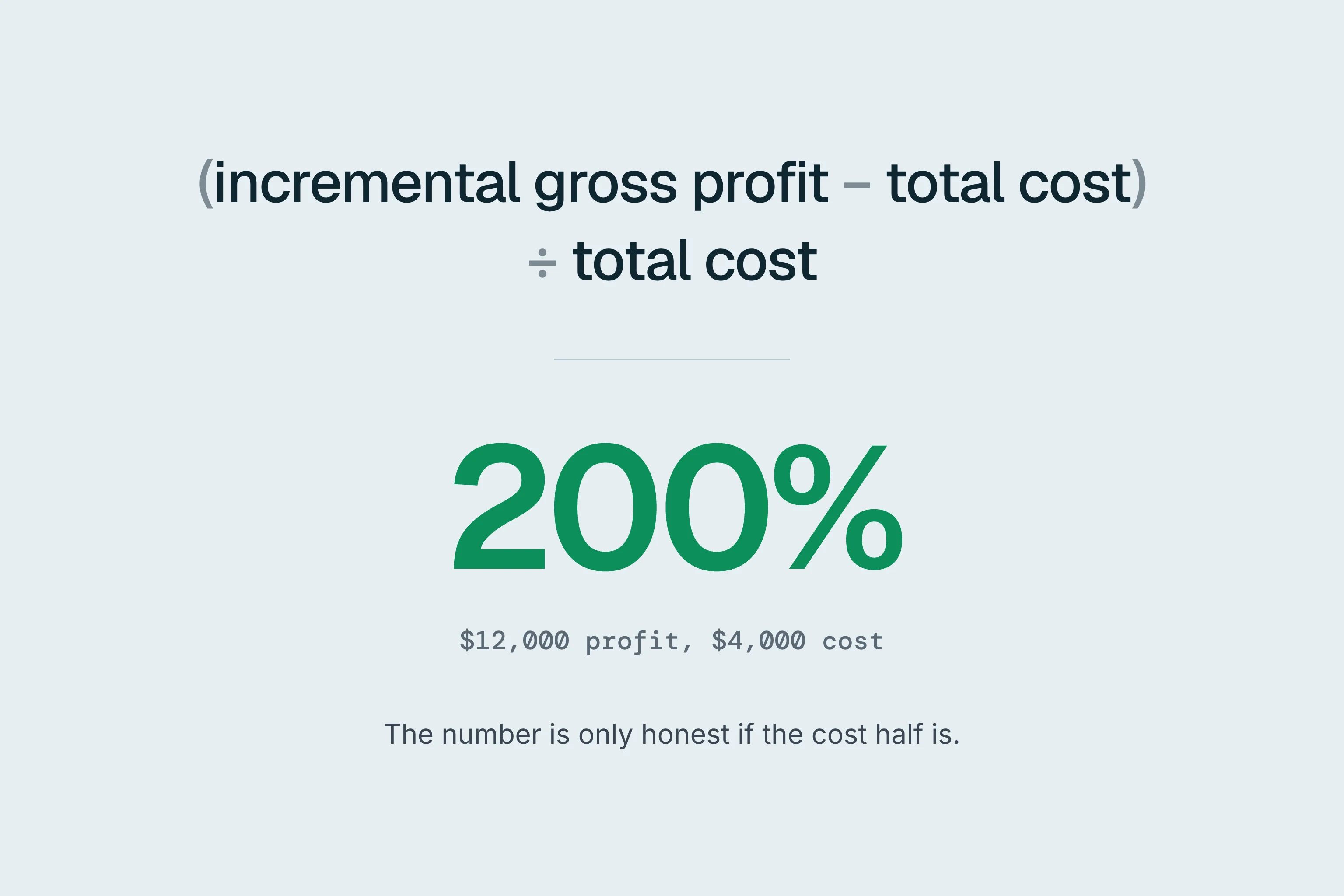
Scenario 3: Cost projection. Model your expected monthly volume across channels. Calculate total cost across your expected volume: flat, usage-neutral pricing versus per-credit or marked-up subscriptions.
Scenario 4: Workflow integration. Demo the approval experience. Can you review and edit quickly on mobile? Does rejected feedback actually change future output?
| Stage | Priority Features | Pricing Model |
|---|---|---|
| Pre-launch/early traction | Research, community engagement | Entry subscription |
| Post-traction/scaling | Multi-agent coordination, volume | Flat, usage-neutral pricing |
| Established team | Collaboration, learning systems | Hybrid (platform + own API keys) |
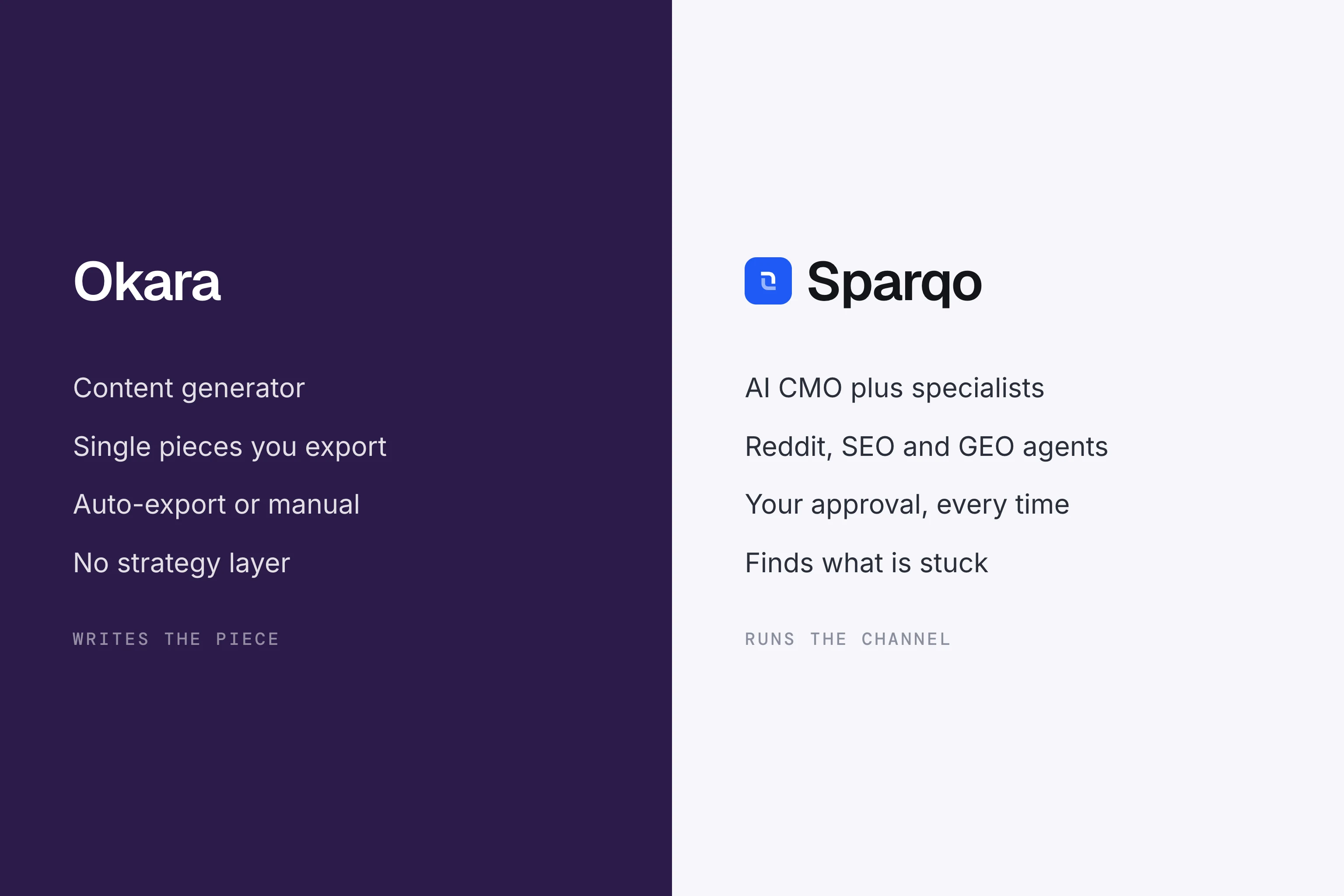
Sparqo is built specifically for the pre-launch through scaling stages, with flat, transparent pricing that scales cost-effectively and specialist agents trained on technical buyer behavior. The approval workflow suits founders who want automation without losing authentic voice. Compare AI CMO approaches to traditional agencies for more on this tradeoff.
The right platform lets you maintain marketing momentum through funding cycles, team changes, and product pivots. It becomes infrastructure rather than overhead, generating compound returns as agents learn your voice and audience.
FAQ
What is the best AI agent for SaaS?
The best AI agent for SaaS depends on your specific channel needs, but effective options combine technical audience understanding with channel-specific expertise. Look for agents trained on developer and practitioner language that can authentically participate in communities like Reddit and Hacker News while coordinating messaging across SEO, LinkedIn, and X. The "best" agent is one that improves from your feedback and operates within a human approval workflow to maintain quality.
What is the marketing automation platform for SaaS?
Marketing automation platforms for SaaS range from traditional tools like HubSpot and Marketo to newer AI-native solutions. SaaS-specific platforms differ in prioritizing technical buyer education, product-led growth content, and community-driven channels over generic B2B marketing. Key differentiators include multi-channel agent coordination, transparent flat pricing for cost control, and workflows designed for founder-operated marketing rather than dedicated marketing teams.
What is the best AI tool for marketing content?
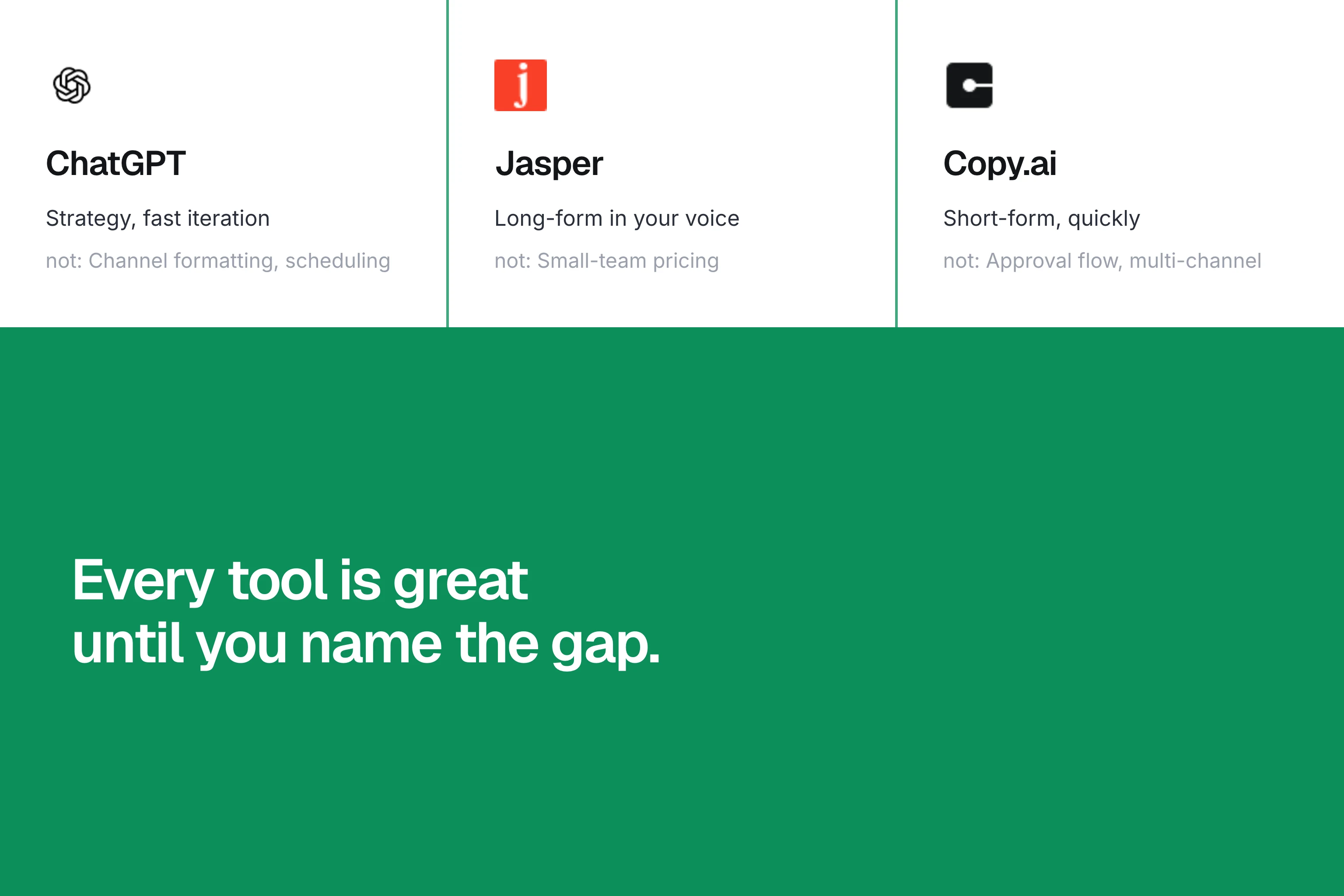
The best AI tool for marketing content depends on your workflow and volume. Single-purpose tools like Copy.ai or Jasper work well for specific formats. Multi-channel platforms with specialist agents suit founders needing coordinated presence across Reddit, Hacker News, SEO, and social. For SaaS specifically, prioritize tools with technical audience training, mandatory approval workflows, and transparent pricing that scales without penalty for heavy usage.
Is AI replacing SaaS?
AI is not replacing SaaS, it is transforming how SaaS companies operate and market. AI agents and automation tools augment founder-led and lean marketing teams, but human judgment remains essential for strategy, positioning, and quality control. The current generation of AI marketing platforms, including those with human-in-the-loop approval, are designed to extend founder capabilities rather than eliminate the need for thoughtful SaaS building and marketing entirely.

Founder of Sparqo, building an AI CMO that runs SEO, AI visibility and Reddit for indie founders and small teams who do their own marketing.