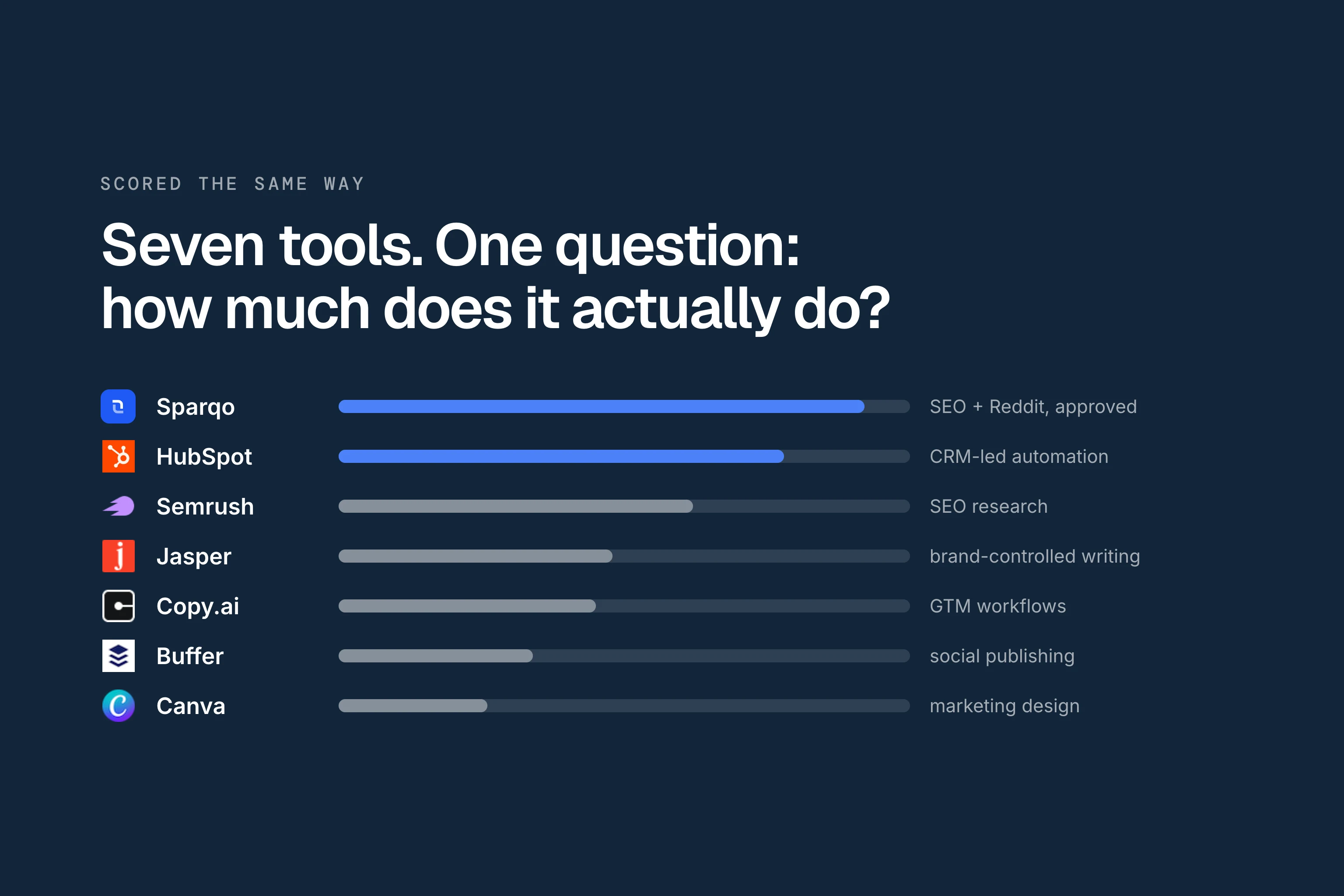
The best AI marketing software depends on how much of the work you want the product to handle. Sparqo is the strongest fit for daily Reddit and SEO execution with approval, while HubSpot suits teams looking for a broad CRM suite. Semrush is best for SEO research, Jasper for brand-controlled writing, and Buffer for assisted social publishing.
This ranking uses five factors: channel coverage, execution depth, human approval, free access, and total cost. A tool that generates copy but leaves planning and distribution to you scores lower for a small team seeking daily execution.
Key takeaways
- Sparqo is the strongest fit for daily Reddit and SEO execution with approval, catering to small teams and founders seeking a virtual 'AI CMO' to plan and draft recurring content while ensuring human oversight.
- HubSpot suits teams looking for a broad CRM suite, integrating marketing activity with customer data, offering broad channel coverage for email, CRM, website, and ads rather than just content generation.
- Semrush is best for in-depth SEO research and optimization, with medium execution depth for SEO, content, and limited social and advertising research, starting at about $140/month.
- Jasper is optimized for brand-controlled AI writing, best for generating content and campaign assets with low to medium execution depth, and available from about $69/month for its Creator plan.
- Buffer specializes in assisted social publishing, providing medium execution depth for scheduling posts across social channels, with a free plan and paid options starting around $6/month per channel.
Is There an AI for Marketing?
Yes. AI marketing software can research audiences, generate content, plan campaigns, analyze performance, and sometimes carry out approved work across channels.
The key difference is between an AI feature and an AI marketing system:
- Assistive tools help you write, design, or analyze.
- Workflow tools connect briefs, approvals, publishing, and reporting.
- Agent systems make recommendations, complete several steps, and return the work for review.
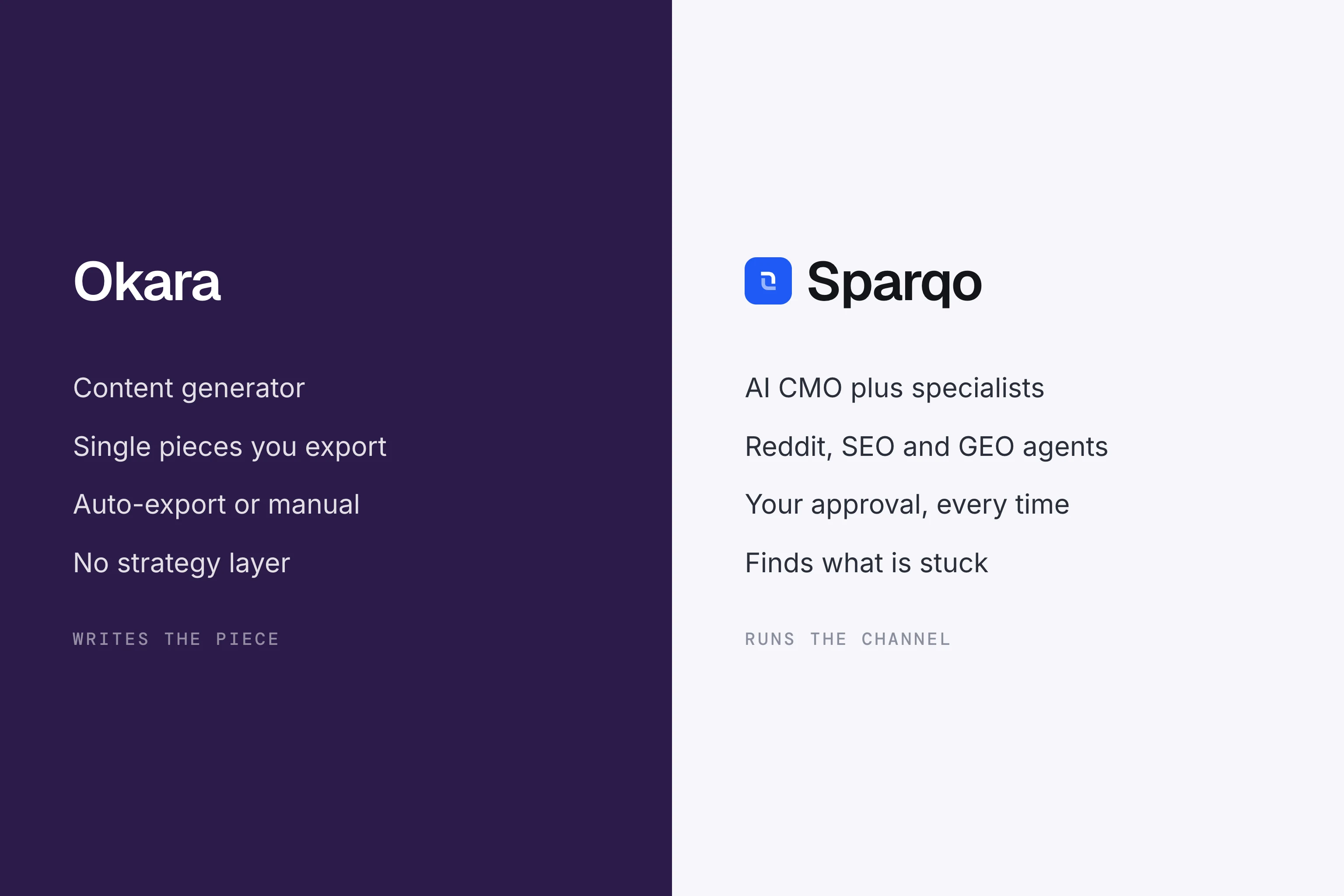
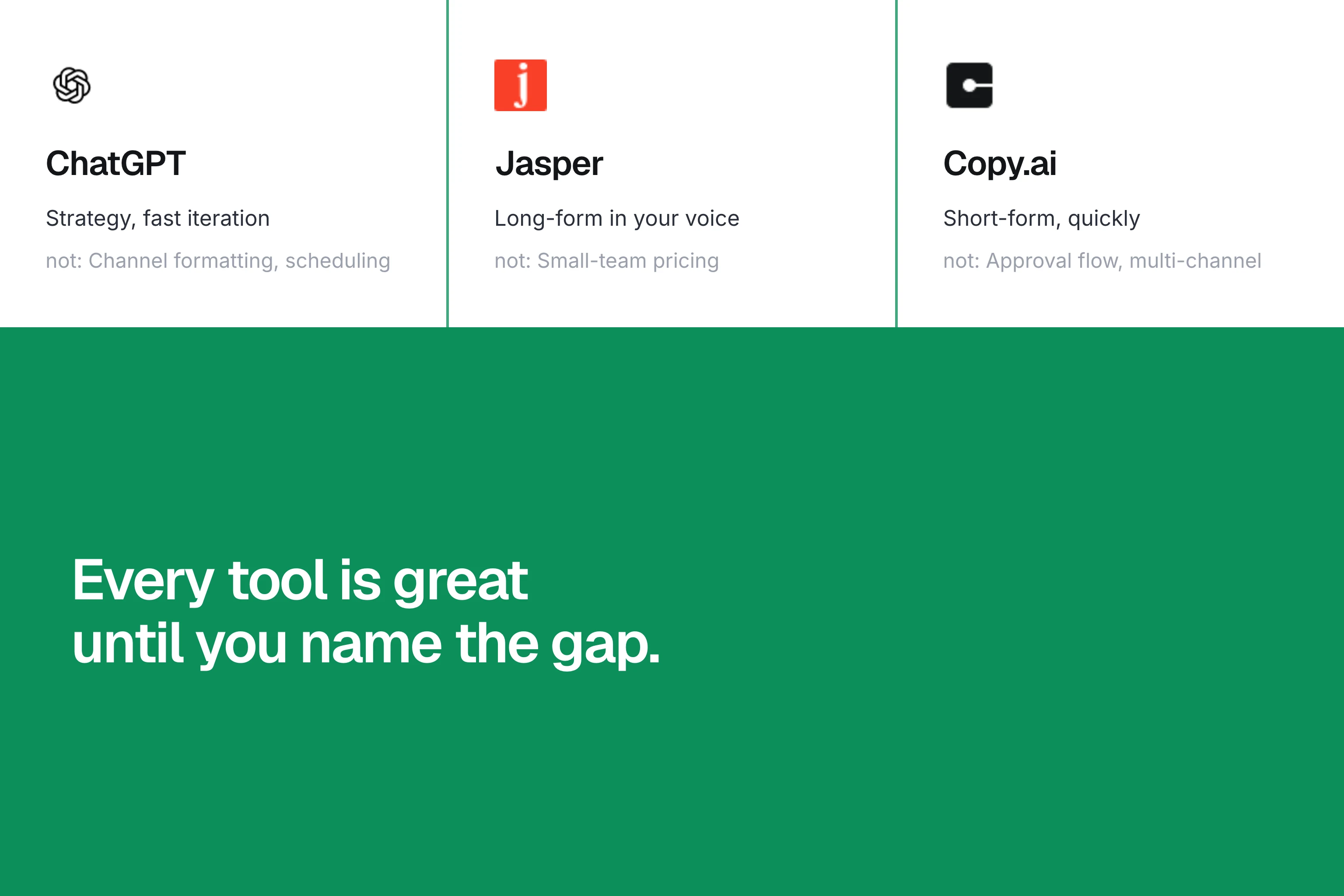
ChatGPT, Jasper, and Canva mainly help produce marketing assets. Semrush supports SEO research, while HubSpot connects marketing activity to a CRM. An agent system such as Sparqo is designed to plan and delegate recurring marketing work across channels, with a person reviewing the output before publication.
ChatGPT can support almost any marketing workflow, but it is not automatically a complete marketing system. You still need to provide the strategy, source material, channel rules, review process, and measurement setup unless another tool handles those jobs.
The Digital Marketing Institute’s overview of AI marketing tools covers tools for content, automation, analytics, and customer engagement, which is a useful way to compare products with different roles.
Best AI Marketing Software At A Glance
The table uses publicly advertised entry pricing where a clear price is available. Prices may change, and some vendors charge by contact volume, seats, channels, or usage. Check the linked vendor page before buying.
| Rank | Software | Best for | Channel coverage | Execution depth | Free access | Starting price |
|---|---|---|---|---|---|---|
| 1 |  Sparqo Sparqo | Daily Reddit and SEO work with approval | SEO and Reddit | High, with human approval | Check current offer | See Sparqo pricing |
| 2 | CRM-led marketing automation | Email, CRM, website, ads, reporting | Medium to high, plan-dependent | Free tools and CRM | Free tier, paid hubs vary | |
| 3 | SEO research and optimization | SEO, content, limited social and advertising research | Medium | Limited free access | About $140/month for Pro | |
| 4 | Brand-controlled AI writing | Content and campaign assets | Low to medium | Trial or limited access may vary | About $69/month for Creator | |
| 5 | GTM and sales workflow generation | Content, sales, and operations workflows | Medium | Limited access may vary | About $29/month for entry access | |
| 6 | Assisted social publishing | Social channels | Medium for scheduling, low for strategy | Free plan available | Free, paid plans from about $6/month per channel | |
| 7 | AI-assisted marketing design | Visual content and social assets | Low | Free plan available | Free, Pro about $15/month |
How the ranking was calculated
A tool ranked highly when it handled more of the marketing loop without making the founder move work between several products. Approval controls received extra weight because autonomous publishing can create brand, legal, and community risks.
Sparqo is therefore a strong fit for a small B2B SaaS team seeking consistent Reddit and SEO execution, but it is not the right choice for every department. HubSpot offers broader customer data functions, Semrush deeper SEO research, and Canva stronger visual production.
The 7 Best AI Marketing Software Picks
1. Sparqo: Best for Daily Reddit and SEO Execution With Approval
Sparqo is best for indie founders and small teams that want an AI CMO to plan and draft recurring SEO and Reddit marketing while keeping a human approval step before anything goes live.
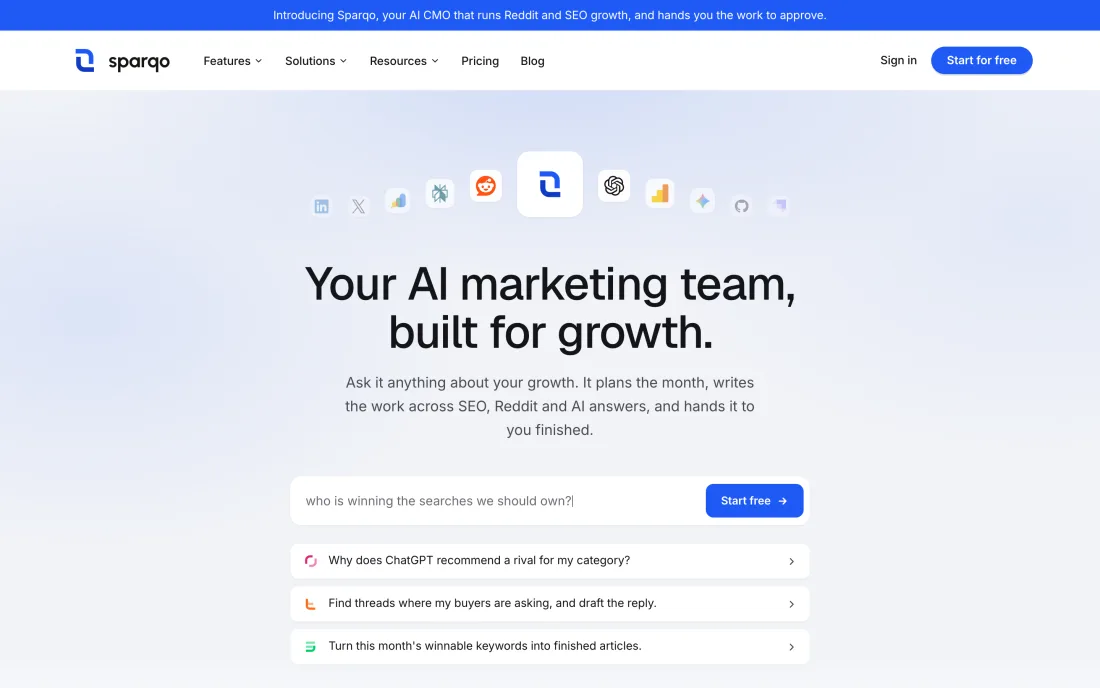
The platform uses specialist AI agents for content, SEO, and Reddit work. Its AI CMO identifies where growth is stuck, creates plans, and delegates work to those agents. The main difference is shared context: what performs in a Reddit discussion can inform an article, while search insights can shape future replies.
That workflow addresses a common problem with tool stacks. A founder may use one product for keyword research, another for writing, a third for scheduling, and a spreadsheet for results. Each tool may work well while the overall process remains disconnected.
Pros
- Covers planning, creation, and distribution for SEO and Reddit.
- Keeps a human approval step before publication.
- Shares context between channels instead of treating each campaign separately.
- Designed for founders without a marketing department.
- Can learn from the user's approvals over time.
Cons
- It focuses on Reddit and SEO rather than every marketing channel.
- Approval is still required, so it does not remove the need for judgment.
- The supplied product information does not specify a fixed price, plan structure, usage limits, or free tier.
- It may not suit a company that mainly needs CRM, email, paid ads, or design.
Who should pick it: Choose Sparqo if your immediate problem is consistent organic distribution, especially SEO and Reddit, and you want drafts and plans to arrive for review instead of starting from a blank page.
A founder who wants to understand the underlying workflow can read how an AI CMO works for startups. For channel-specific details, Sparqo also explains its AI SEO agent and Reddit marketing agent.
2. HubSpot: Best for CRM-Led Marketing Automation
HubSpot is best for teams that want marketing activity connected to contacts, deals, forms, email, website pages, sales follow-up, and reporting.
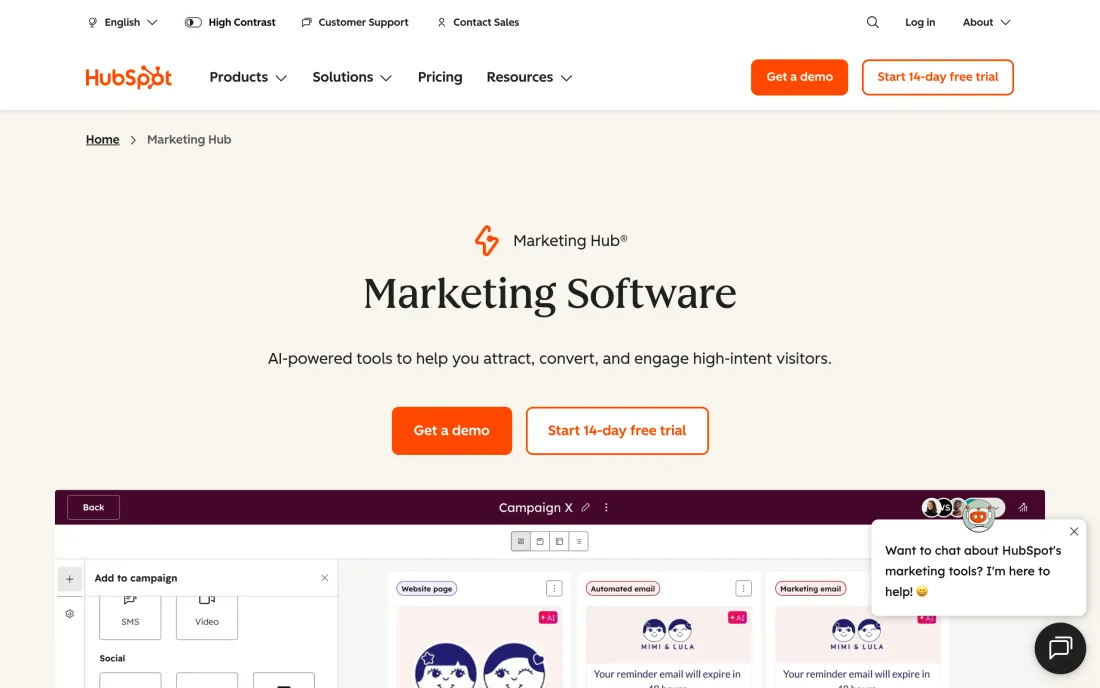
Its main advantage is breadth. A company can start with free CRM and marketing tools, then add paid functionality as its database and automation needs grow. The tradeoff is complexity and cost: pricing varies by hub, contacts, seats, and features.
Pros
- Connects marketing, sales, and customer records.
- Offers a free CRM and other free tools.
- Supports forms, email, lead management, and reporting.
- Provides a broad ecosystem for growing companies.
Cons
- Costs become harder to predict as contacts and features increase.
- Requires setup and process discipline.
- Does not automatically create a focused SEO and Reddit program.
- May be more than a founder needs for content distribution.
Who should pick it: Pick HubSpot when the bottleneck is lead capture, CRM hygiene, email automation, or sales handoff.
3. Semrush: Best for SEO Research and Content Decisions
Semrush is best for teams that need search data, competitor research, keyword analysis, site audits, and content planning in one SEO platform.
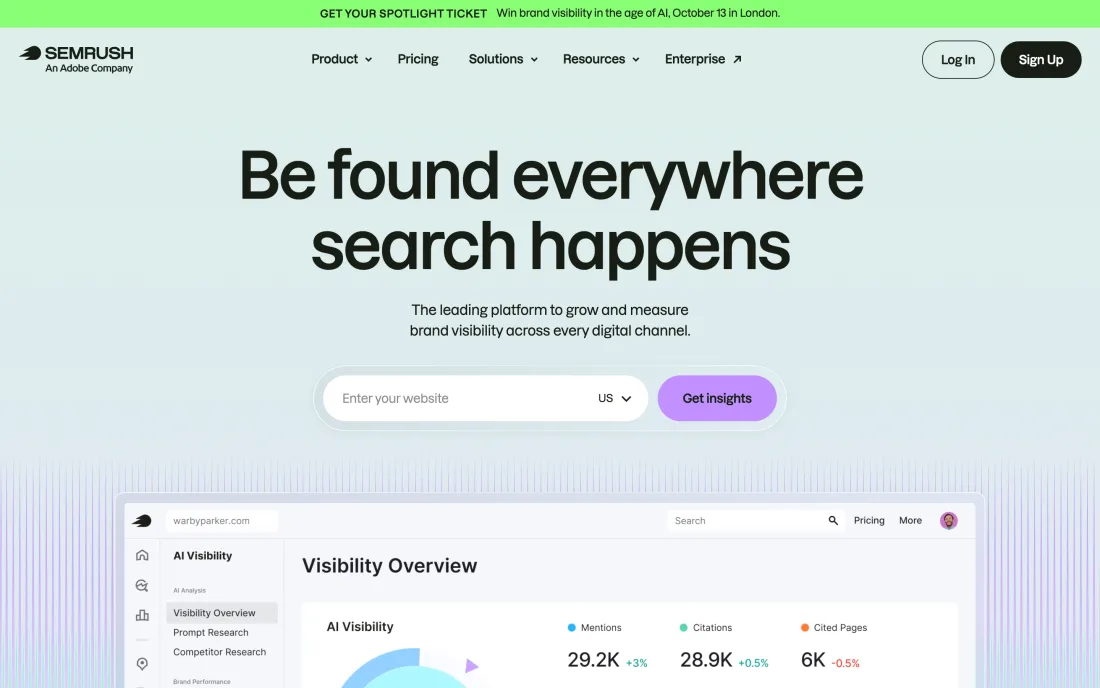
Its Pro plan is commonly listed at about $140 per month, with higher costs for additional limits and features. Semrush helps answer which topics have demand, how difficult a query may be, and where competitors receive organic visibility.
It is less of an autonomous marketing operator. The user generally decides what to prioritize, produces or reviews the asset, and manages distribution.
Pros
- Deep SEO and competitor research.
- Useful for keyword prioritization and site audits.
- Connects content decisions to search opportunities.
- Strong fit when organic search is the primary channel.
Cons
- The starting price is high for a solo founder.
- Data limits and add-ons can increase total cost.
- Does not replace a full content and community execution process.
- Reddit distribution is not its core use case.
Who should pick it: Choose Semrush if you or a contractor will act on SEO recommendations and need detailed research.
4. Jasper: Best for Brand-Controlled Content Production
Jasper is best for marketing teams that already have a content process and want AI help with campaign assets, drafts, and brand consistency.
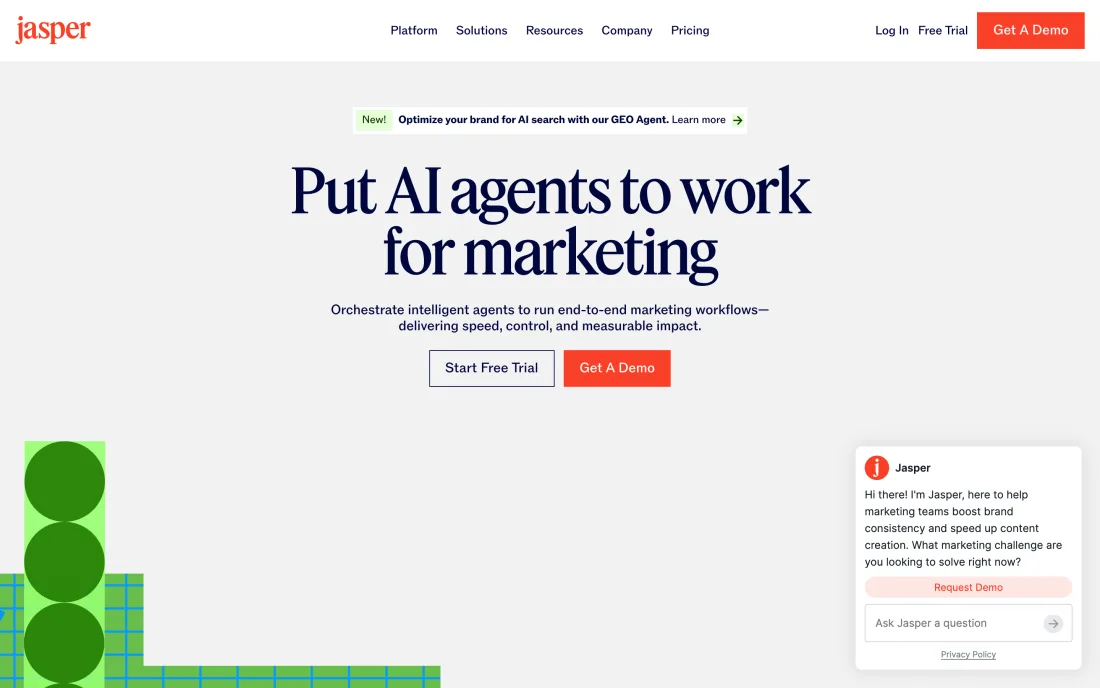
It can produce different versions of a message while applying a defined brand voice across common marketing tasks. Public pricing has commonly placed its Creator plan around $69 per month, although billing terms and plan details should be confirmed.
Jasper does not decide the audience, campaign, channel, or distribution process for you.
Pros
- Produces multiple marketing drafts quickly.
- Better suited than a general chatbot when brand consistency matters.
- Supports repeated campaign asset production.
- Fits teams with an established content process.
Cons
- The user still owns planning and distribution.
- Cost may be difficult to justify for occasional content.
- It is less suited to Reddit conversations and SEO execution.
- Output depends on the brand context and instructions provided.
Who should pick it: Pick Jasper if your team needs a controlled writing layer, not if the main problem is deciding what to do next.
5. Copy.ai: Best for Go-to-Market and Sales Workflows
Copy.ai is best for teams that want AI-generated workflows for sales, go-to-market operations, and content tasks.
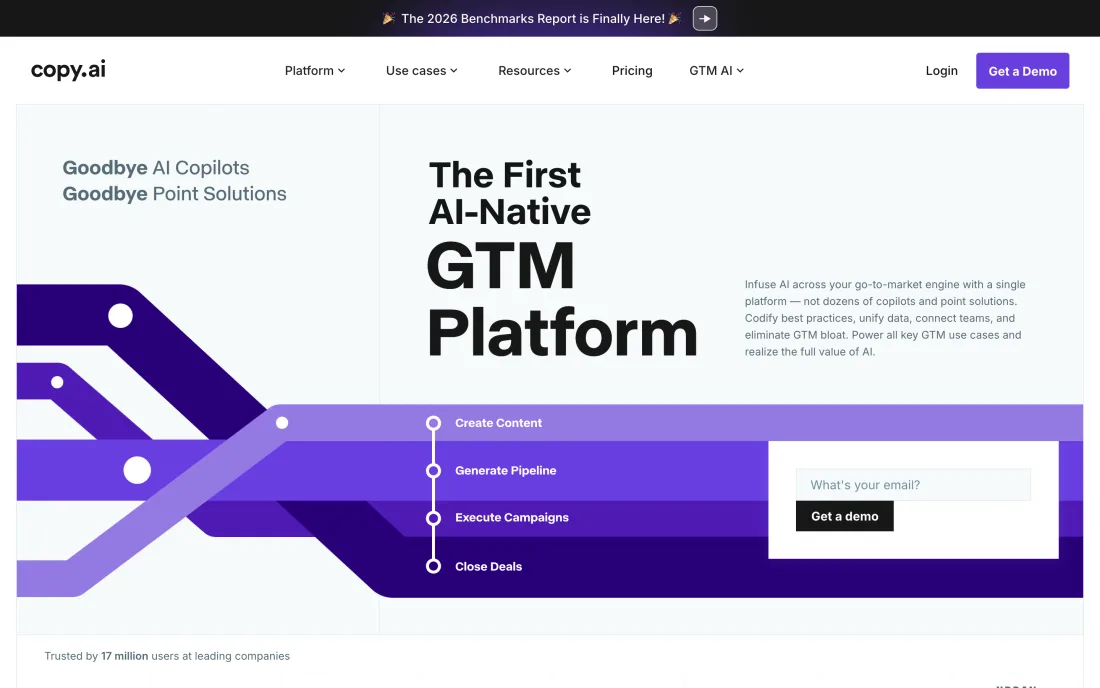
It can structure repeatable processes around prospecting, messaging, and content production. Entry pricing has commonly been listed around $29 per month, with higher tiers and differences in usage or workflows depending on the current plan.
Its flexibility is useful for teams willing to define their own operating procedures, but workflow setup remains the user's responsibility.
Pros
- Supports repeatable GTM and sales workflows.
- More process-oriented than a basic AI writing interface.
- Covers several marketing and revenue use cases.
- Has a lower entry cost than some specialist platforms.
Cons
- Workflow setup can become another project.
- Quality depends on the process and source information provided.
- Does not automatically provide daily SEO and Reddit execution.
- Pricing and included usage should be checked against team volume.
Who should pick it: Choose Copy.ai when you want to design and automate defined GTM processes.
6. Buffer: Best for Simple Social Scheduling
Buffer is best for small teams that need to draft, schedule, and review social posts through a simple publishing workflow.
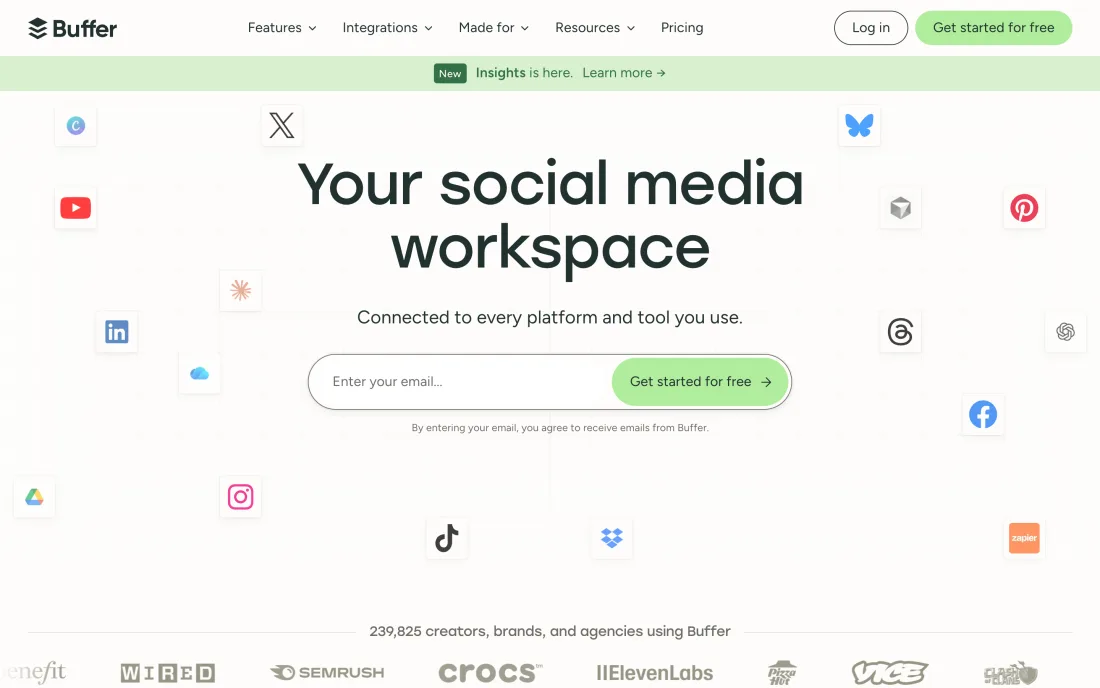
Its free plan makes it easy to try. Paid plans have commonly started at about $6 per month per channel, depending on the number of channels and features.
Buffer is useful after a team has decided what to say and where to publish it. It does not replace keyword research, audience discovery, positioning, or content strategy.
Pros
- Free access is available.
- Provides simple social scheduling and review.
- Has a low starting cost for a small number of channels.
- Is easier to adopt than a larger marketing suite.
Cons
- Primarily focuses on social publishing.
- Offers limited SEO planning and search measurement.
- The team still needs to create the strategy and source content.
- Costs increase as more channels are added.
Who should pick it: Pick Buffer when your marketing plan is clear and the main problem is keeping social posts scheduled.
7. Canva: Best for AI-Assisted Marketing Design
Canva is best for producing social graphics, presentations, simple campaign visuals, and other marketing design assets without a dedicated designer.
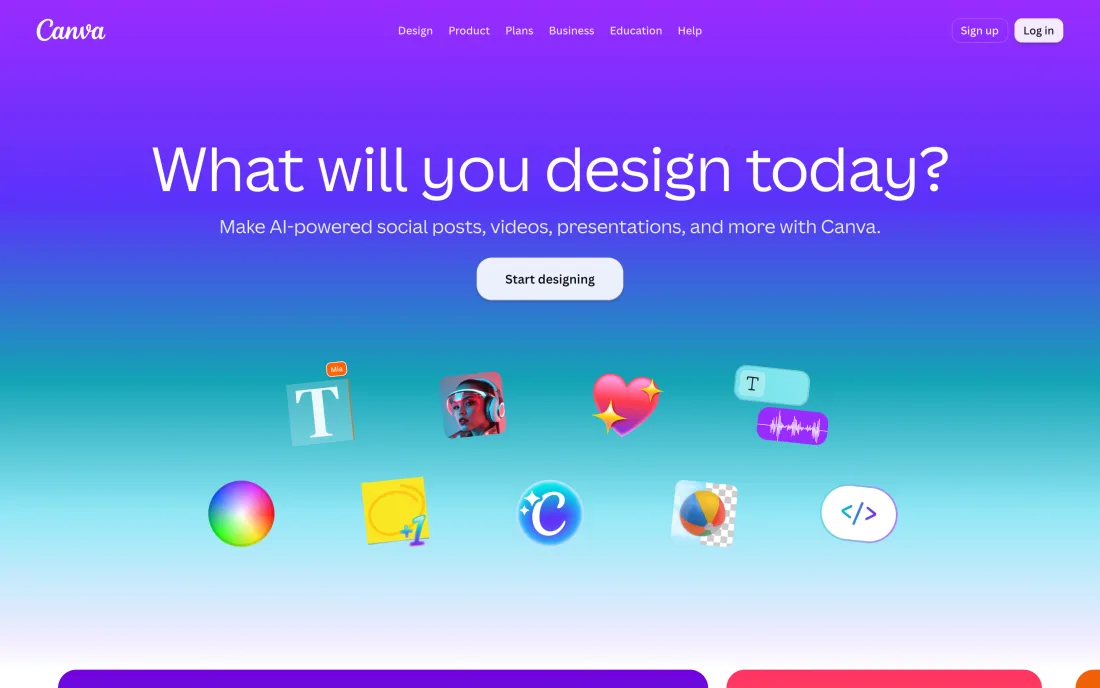
Canva has a free plan, while Canva Pro has commonly been priced around $15 per month for an individual, with regional and billing differences. Its AI tools can speed up ideation, editing, and asset creation, but the product remains focused on design.
Pros
- Strong free starting point.
- Accessible design workflow for non-designers.
- Useful templates and visual asset production.
- Good fit for social and presentation-heavy marketing.
Cons
- Limited strategic planning.
- Limited SEO and community execution.
- AI-generated visuals and text still need review.
- Teams can spend time making assets before validating the message.
Who should pick it: Choose Canva when visual production is slowing campaigns down. Pair it with a research or execution tool if you also need consistent organic growth.
Jasper, HubSpot, Buffer, Copy.ai, Semrush, and Canva: Best For Different Marketing Jobs
These products are not interchangeable. Each covers a different part of the marketing process.
| Marketing job | Best fit | Why |
|---|---|---|
| Find search opportunities | Research and SEO analysis | |
| Manage leads and campaigns | CRM and marketing records | |
| Draft brand-led campaign content | Controlled content production | |
| Build repeatable GTM workflows | Workflow and sales use cases | |
| Schedule social posts | Publishing and scheduling | |
| Create visual assets | Design and presentations | |
| Run recurring SEO and Reddit work | Sparqo | Planning, drafting, and approved execution |
A broad suite gives you more functions in one account, but you may still need a person to operate each one. A narrower agent system may cover fewer channels while handling more recurring work within those channels.
For a small B2B SaaS company, buying several specialist tools also creates hidden costs. Time spent moving briefs, prompts, drafts, approvals, and performance data between tools can matter more than the individual subscription prices.
Which AI Marketing Software Has A Free Plan?
The best free AI marketing tools are HubSpot, Buffer, and Canva, although their free access covers different jobs. Semrush also offers limited access, while paid AI platforms may provide trials or restricted entry plans that change over time.
Best free options by use case
- HubSpot: Best for a free CRM foundation and basic customer workflows.
- Buffer: Best for trying social scheduling with a small number of channels.
- Canva: Best for producing basic marketing graphics and presentations.
- Semrush: Best for sampling SEO research before paying for broader limits.
- ChatGPT: Best for general brainstorming, rewriting, and analysis, but you must create the marketing workflow yourself.
A free plan is useful when it lets you test the job you need done. A free design editor will not validate your SEO strategy, and a free CRM will not produce thoughtful Reddit participation.
For Sparqo, the supplied product information does not confirm a free plan, trial terms, or usage limits. Check the current Sparqo pricing information rather than assuming a free offer exists.
How To Choose AI Marketing Software For A Small Team
The best AI marketing software for a small business is the product that removes the most repeated work without creating review problems.
Start with the channel, not the feature list. Semrush is a strong first purchase for search demand research. HubSpot fits lead capture and email workflows. Sparqo is more closely aligned with steady SEO and Reddit activity.
Score each option against five questions:
- What does it do after you enter the brief? Does it return a draft, recommendation, scheduled post, or completed multi-step workflow?
- Which channels share context? Separate tools often make you repeat the same audience, product, and positioning information.
- Where does approval happen? Look for a clear review step before a post, article, email, or campaign is published.
- What will the full monthly cost be? Include seats, contacts, channels, add-ons, usage limits, and the human time needed to operate the system.
- Can you measure the result? Connect landing pages, signups, onboarding completion, and approved marketing work to the channels that created them.
Test one real campaign rather than relying on a generic demo. Give the software a product description, target segment, customer objections, and business goal. Ask it to propose a week of work, then check whether the result includes specific topics, appropriate channel behavior, approval points, and a way to learn from performance.
Do not confuse autonomy with permission to publish everything. Community channels need judgment, and SEO content needs fact checking. Sparqo's human-in-the-loop model suits teams that want daily assistance without allowing unreviewed marketing output to represent the company.
Keep the stack small until the workflow proves itself. One connected system covering priority channels may be easier to run than four tools that do not share context. Teams comparing an agent approach with separate software can also read how AI agents for marketing work in 2026 and how to build an AI marketing workflow.

Founder of Sparqo, building an AI CMO that runs SEO, AI visibility and Reddit for indie founders and small teams who do their own marketing.