Vibe marketing is an informal approach to brand building where teams rely on intuition, cultural awareness, and AI-assisted content generation rather than rigid strategic frameworks. Instead of months-long planning cycles, practitioners identify emerging trends, memes, and platform shifts, then rapidly deploy campaigns that match the moment. The term gained traction in 2025 and 2026 as AI tools made it possible to execute this style of marketing without large creative teams.
Key takeaways
- Vibe marketing is an informal approach relying on intuition, cultural awareness, and AI to rapidly deploy campaigns matching emerging trends and platform shifts.
- This method treats marketing as responsive improvisation, requiring rapid trend detection, fast creative production, and multi-channel distribution, primarily enabled by AI tooling.
- Vibe marketing contrasts with traditional methods by prioritizing responsiveness over predictability, operating on shorter planning horizons, and using AI for creative production.
- The practical workflow involves identifying trends, synthesizing content quickly with AI, distributing it across channels for real-time testing, and integrating learning into future cycles.
- Key tools for vibe marketing include large language models for copy, specialized AI for visuals/video, and monitoring tools for trend detection, often used in assembled stacks rather than single platforms.
What Is Vibe Marketing?
Vibe marketing treats marketing as responsive improvisation rather than engineered funnel architecture. Teams monitor social platforms, community discourse, and real-time signals to identify what resonates emotionally with their audience. Then they produce content that captures that resonance before the moment passes.
This approach requires three core capabilities: rapid trend detection, fast creative production, and distribution across multiple channels. AI tooling has made the second and third viable for small teams. What once required a creative department, copywriters, and media buyers now happens through prompt engineering and automated posting schedules.
The method has different expressions depending on platform. On Reddit, vibe marketing might mean identifying a thread where your problem domain surfaces naturally, then contributing authentically. On LinkedIn, it means catching the tone of professional conversation at a specific week and matching it. On X, it often means speed, meme literacy, and willingness to discard polished brand guidelines.
Critically, vibe marketing is not the absence of strategy. It is strategy compressed into shorter cycles, with feedback loops measured in days or weeks rather than quarters. Teams still analyze what worked and what failed. They just fail faster and cheaper.
Vibe Marketing Vs Traditional Marketing
Traditional marketing operates on predictability: annual plans, quarterly reviews, approved messaging hierarchies, and brand safety guardrails. Vibe marketing trades some predictability for responsiveness.
| Dimension | Traditional Marketing | Vibe Marketing |
|---|---|---|
| Planning horizon | 6-12 months | Days to 4 weeks |
| Creative production | Specialized teams, approval chains | AI-assisted, individual operators |
| Messaging control | Centralized, locked guidelines | Distributed, adaptive |
| Risk profile | Low, measured | Higher, mitigated by speed |
| Primary feedback | Attribution, funnel metrics | Engagement velocity, sentiment |
| Capital requirement | High for creative and media | Lower, tool-based |
Traditional methods fail when market conditions shift unexpectedly. Vibe marketing fails when teams mistake noise for signal, chase irrelevant trends, or sacrifice brand consistency for short-term attention.
The practical reality for most small teams is hybrid execution. Core positioning and product messaging remain stable. Surface-level execution adapts to platform culture and momentary opportunity.
Marketers are increasingly adopting this hybrid as AI reduces the cost of variation. A traditional team might produce three creative variants for a campaign. A vibe-savvy team with AI assistance might produce thirty, test them in hours, and double down on what engages.
How Vibe Marketing Works In Practice
The operational workflow differs significantly from conventional marketing playbooks.
Trend Identification
Practitioners use a mix of manual monitoring and automated alerts. Reddit communities, LinkedIn creator posts, X trending topics, and Hacker News comment sections serve as early warning systems. Some teams use AI tools to summarize large volumes of community discussion and surface patterns.
Creative Synthesis
Once a relevant signal emerges, the team moves to production. This is where AI tooling becomes essential. Large language models generate copy variations. Image generation tools produce visuals. Audio and video tools create short-form content. The goal is not perfection but speed and cultural fit.
Distribution and Testing
Content deploys across channels with minimal friction. The vibe marketing ethos favors publishing over polishing. Teams monitor engagement metrics in real-time, identify what resonates, and iterate immediately.
Learning Integration
Successes and failures feed back into future cycles. Teams develop intuition for what works on each platform and refine their AI prompting accordingly. This creates compounding advantage: operators get faster and more precise with each cycle.
A concrete example from 2026: several DevTool founders identified growing frustration with Kubernetes complexity on Hacker News and Reddit. Rather than publishing a white paper, they used AI to generate a series of memes, short technical rants, and thread responses that acknowledged the pain point directly. Engagement rates exceeded their traditional content by 4-8x. The campaign ran for two weeks, cost under $500 in tooling, and produced qualified pipeline that closed within the quarter.
Vibe Marketing Tools And AI
The tooling landscape for vibe marketing is fragmented and evolving rapidly. Most practitioners assemble stacks rather than relying on single platforms.
Content Generation
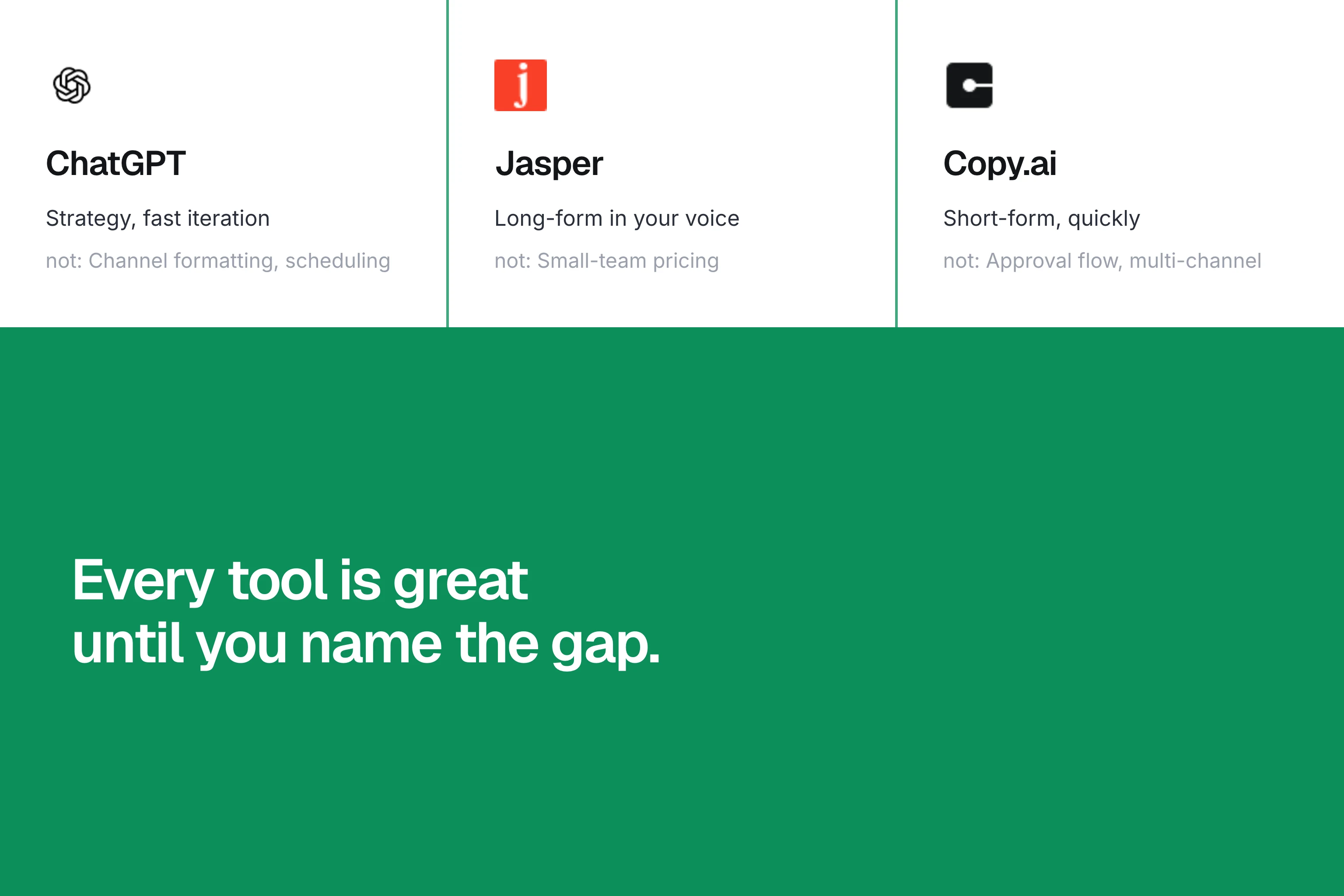
Large language models (ChatGPT, Claude, Gemini) handle copy. Specialized tools like Midjourney, DALL-E, and Runway cover visual and video production. Many teams use API access to automate generation at scale.
Trend Monitoring
Native platform browsing remains common, but tools like Gummysearch for Reddit, Hootsuite for social listening, and custom scrapers for Hacker News help automate signal detection.
Publishing and Workflow
Buffer, Hootsuite, and similar schedulers handle posting. The critical gap is coordination: most teams use separate tools for each function, creating fragmentation and context loss.
Emerging Integrated Solutions
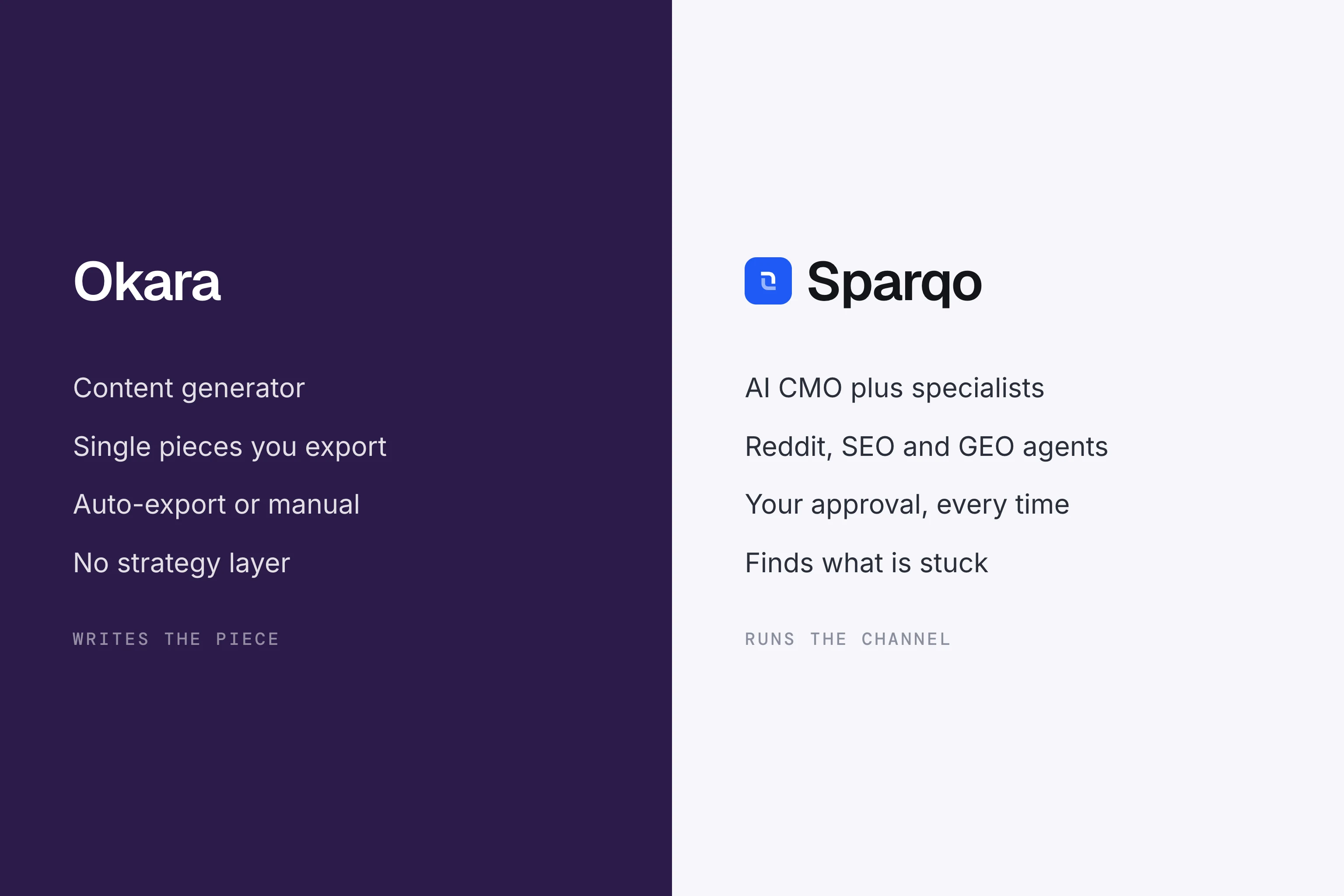
Some platforms now offer coordinated agent systems. Sparqo operates specialist AI agents across Reddit, SEO, GEO, Hacker News, X, and LinkedIn, with a CMO agent coordinating work and requiring human approval before publication. This addresses the core vibe marketing challenge: maintaining quality and brand safety while moving fast.
The difference between amateur and professional vibe marketing often comes down to workflow discipline. Casual practitioners prompt AI and hope. Systematic practitioners build feedback loops, approval gates, and learning mechanisms that improve output over time.
For teams evaluating options, the key decision is build-versus-buy on coordination. Assembling individual tools offers flexibility but demands integration effort. Integrated platforms constrain customization but reduce operational overhead.
See our analysis of AI content marketing automation platforms for SaaS founders for detailed capability comparisons.
Does Vibe Marketing Actually Work?
The honest answer: it works for specific objectives under specific conditions. It is not a universal replacement for traditional marketing.
When It Works
Vibe marketing excels at awareness and community building in fast-moving markets. It is effective when:
- Your audience congregates on platforms with real-time culture (Reddit, X, LinkedIn, Hacker News)
- Your product category is experiencing rapid discourse evolution
- Your team has genuine subject expertise and can participate authentically
- Speed-to-insight matters more than polish
- You can tolerate higher variance in outcomes
Many DevTool and B2B SaaS founders find it particularly effective for early-stage positioning, where category definitions remain fluid and thought leadership opportunities exist.
When It Fails
Vibe marketing underperforms when:
- Your audience requires trust-building through depth and consistency (enterprise buyers, regulated industries)
- Your brand suffers from inconsistency or perceived opportunism
- Your team lacks genuine platform fluency and produces obviously inauthentic content
- You optimize for vanity engagement over business outcomes
- You abandon measurement entirely in pursuit of speed
The most common failure mode is mistaking activity for effectiveness. Teams produce high volumes of content that generates engagement but no qualified pipeline. This creates a dangerous illusion of marketing success while the business stalls.
Measurement remains essential. Vibe marketing requires tracking both top-of-funnel engagement and downstream conversion. Without this discipline, it devolves into expensive entertainment.
For guidance on building measurement into AI-assisted workflows, see our fractional CMO explained guide.
How Much Does Vibe Marketing Cost?
Cost structures differ dramatically depending on approach and team structure.
Tool-Only Execution
A solo founder can begin with minimal investment:
- AI subscriptions (ChatGPT Plus, Claude Pro, Midjourney): $60-150/month
- Scheduling and monitoring tools: $30-100/month
- Total: $100-250/month
This supports basic content generation and distribution. The hidden cost is time: significant hours spent prompting, reviewing, and managing separate systems.
Hybrid Tool + Platform Approach
Teams using coordinated platforms pay more in subscription but less in operational overhead:
- Integrated AI marketing platform: $500-2,000/month
- Reduced manual coordination: 10-20 hours/week saved
- Total effective cost: varies by founder time valuation
Agency Alternative
Traditional agencies executing vibe-style campaigns charge premium rates for responsiveness:
- Retainer-based: $5,000-15,000/month
- Project-based rapid campaigns: $10,000-50,000 per initiative
The cost advantage of AI-assisted in-house execution is substantial for teams with marketing aptitude. For teams lacking that aptitude, agencies may still outperform despite higher cost.
Platform-Specific Context: "Vibe" as Product Name
Some searchers arrive here asking about "Vibe" as a specific platform or app. Vibe is a real software company offering collaboration tools for remote teams, including digital whiteboarding and meeting spaces. Its pricing operates on a per-user model, typically $8-16/user/month depending on plan tier. This differs entirely from "vibe marketing" as a practice. The confusion is unfortunate but common.
| Approach | Monthly Cost | Time Investment | Best For |
|---|---|---|---|
| Manual + individual AI tools | $100-250 | High | Learning, experimentation |
| $500-2,000 | Medium | Systematic execution | |
| $5,000-15,000+ | Low ( oversight) | Teams lacking internal capacity |
For current platform pricing, visit Sparqo's pricing page.
Vibe Marketing Strategy For Small Teams
Small teams and indie founders face specific constraints that shape effective vibe marketing strategy.
Constraint 1: No Dedicated Marketing Function
Most early-stage teams lack full-time marketing staff. The founder or technical lead handles distribution alongside product and operations. This makes tool efficiency critical. Fragmented stacks that require constant context-switching consume cognitive resources that do not exist.
Constraint 2: Limited Brand Recognition
Unknown brands cannot rely on reputation to carry inconsistent execution. Every touchpoint must build credibility. This creates tension with vibe marketing's emphasis on speed and informality. Small teams need approval workflows that prevent off-brand disasters without creating bureaucratic drag.
Constraint 3: Narrow Resource Windows
Marketing happens in gaps between product crises, fundraising demands, and customer fires. Sustained daily execution is unrealistic. Systems must accommodate intermittent attention without collapsing.
Strategy Implications
Given these constraints, effective small-team vibe marketing emphasizes:
- Batch preparation: Generating content in focused sessions rather than daily fragments
- Template systems: Developing prompt libraries and format templates that reduce decision fatigue
- Approval safety nets: Human review before publication to prevent costly mistakes
- Cross-platform repurposing: Extracting maximum value from each content investment
- Metric simplicity: Tracking 2-3 meaningful indicators rather than dashboard overload
A practical workflow for a two-person DevTool startup: Monday morning trend review (30 minutes), Tuesday content generation session (2 hours), Wednesday approval and scheduling (1 hour), then automated publication through the week with monitoring for engagement spikes worth manual response.
This rhythm acknowledges reality better than daily idealism. It also creates space for genuine community participation, which AI cannot replicate.
For Reddit-specific execution guidance, see our guide to Reddit marketing without getting banned.
When Vibe Marketing Fails And Why
Understanding failure modes helps teams avoid expensive experimentation.
Failure Mode 1: Platform Mismatch
Teams apply vibe tactics where the audience does not respond to informality. Enterprise procurement on LinkedIn operates differently than founder discourse on X. Attempting meme-driven engagement with risk-averse buyers creates dissonance, not connection.
Failure Mode 2: Authenticity Deficit
Audiences detect manufactured participation. If your team lacks genuine expertise in the communities you target, vibe marketing becomes transparent performance. This damages credibility permanently. Start with communities where you have standing, not where you want presence.
Failure Mode 3: Speed Without Direction
The intoxication of rapid execution leads teams to optimize for engagement metrics that do not correlate with business outcomes. Viral content that generates no qualified pipeline is a distraction, not a win. Maintain clear connection between activity and revenue.
Failure Mode 4: Brand Erosion
Reactive positioning risks contradicting core value propositions. If every campaign chases a different trend, audiences cannot form stable associations. Reserve 20-30% of effort for consistent, long-term narrative building even while pursuing momentary opportunities.
Failure Mode 5: Regulatory and Compliance Blindness
Finance, healthcare, and other regulated industries impose constraints that vibe marketing ignores at peril. Even in less regulated sectors, data privacy and advertising disclosure requirements apply. Fast execution cannot mean sloppy compliance.
Failure Mode 6: Tool Dependency Without Skill
AI tools amplify capable operators and expose incapable ones. Teams that cannot write, cannot judge creative quality, and cannot interpret platform culture produce AI-generated noise. The tool is not the strategy. Human judgment remains essential.
The pattern across failures is treating vibe marketing as permission to abandon rigor. It is not. It is rigor applied to shorter cycles with different success metrics.
Teams considering this approach should honestly assess: Do we understand our audience's communities? Can we participate authentically? Do we have measurement discipline? Do we have approval processes that prevent disasters?
If the answer to any is no, fix that before accelerating execution.
Vibe marketing represents a genuine shift in how small teams can build awareness, accelerated by AI capabilities that reduce production friction. It is not magic, not a replacement for strategy, and not without risk. The teams that succeed treat it as a capability to develop, not a shortcut to exploit.
For teams coordinating across multiple channels with limited time, Sparqo provides an AI CMO system with specialist agents, human approval workflows, and learning mechanisms that improve output over time. The approach combines responsiveness with accountability.
See our 2026 SEO playbook for founders for complementary organic growth strategies, or explore B2B marketing agency alternatives if you are evaluating external support options.
FAQ
What is vibe marketing?
Vibe marketing is an approach where teams use cultural intuition and AI-assisted tools to rapidly create and distribute campaigns based on emerging trends and platform moments, rather than following traditional long-term planning cycles.
How much does it cost to advertise on Vibe?
This likely refers to Vibe.co, a programmatic advertising platform for connected TV. CPMs typically range from $15-40 depending on targeting and inventory. However, "vibe marketing" as a practice does not require paid advertising, just AI tools and platform access costing $100-2,000 monthly.
Does vibe marketing actually work?
It works for awareness and community building in fast-moving B2B environments where audiences congregate on real-time platforms like Reddit, Hacker News, and X. It fails when applied to trust-dependent enterprise sales, executed without authentic expertise, or measured by engagement rather than pipeline impact.
How much does the Vibe app cost?
Vibe (vibe.us) offers digital whiteboarding and collaboration tools for remote teams. Pricing runs approximately $8-16 per user monthly depending on plan features and billing frequency, distinct from vibe marketing as a practice.
Founder of Sparqo, building an AI CMO that runs SEO, AI visibility and Reddit for indie founders and small teams who do their own marketing.